
Last updated October 31, 2026
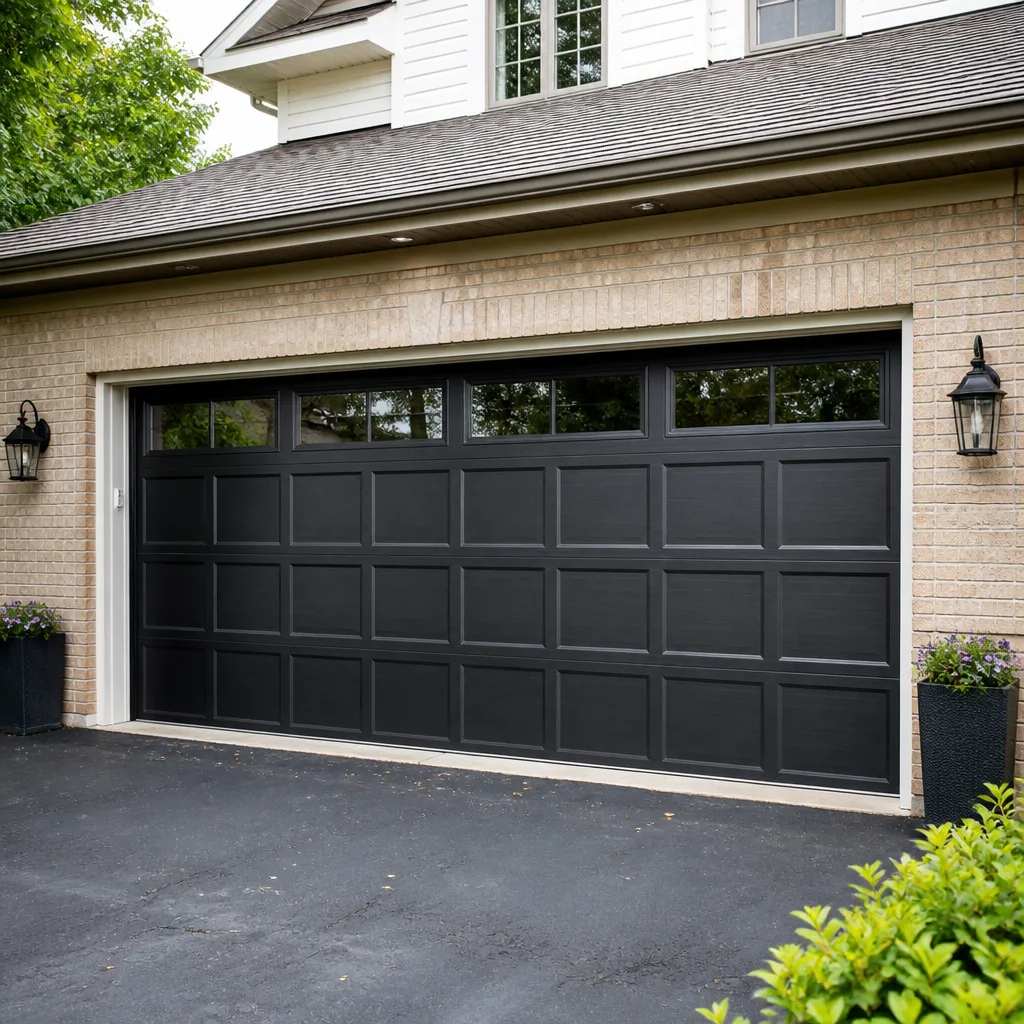 Raised-panel steel
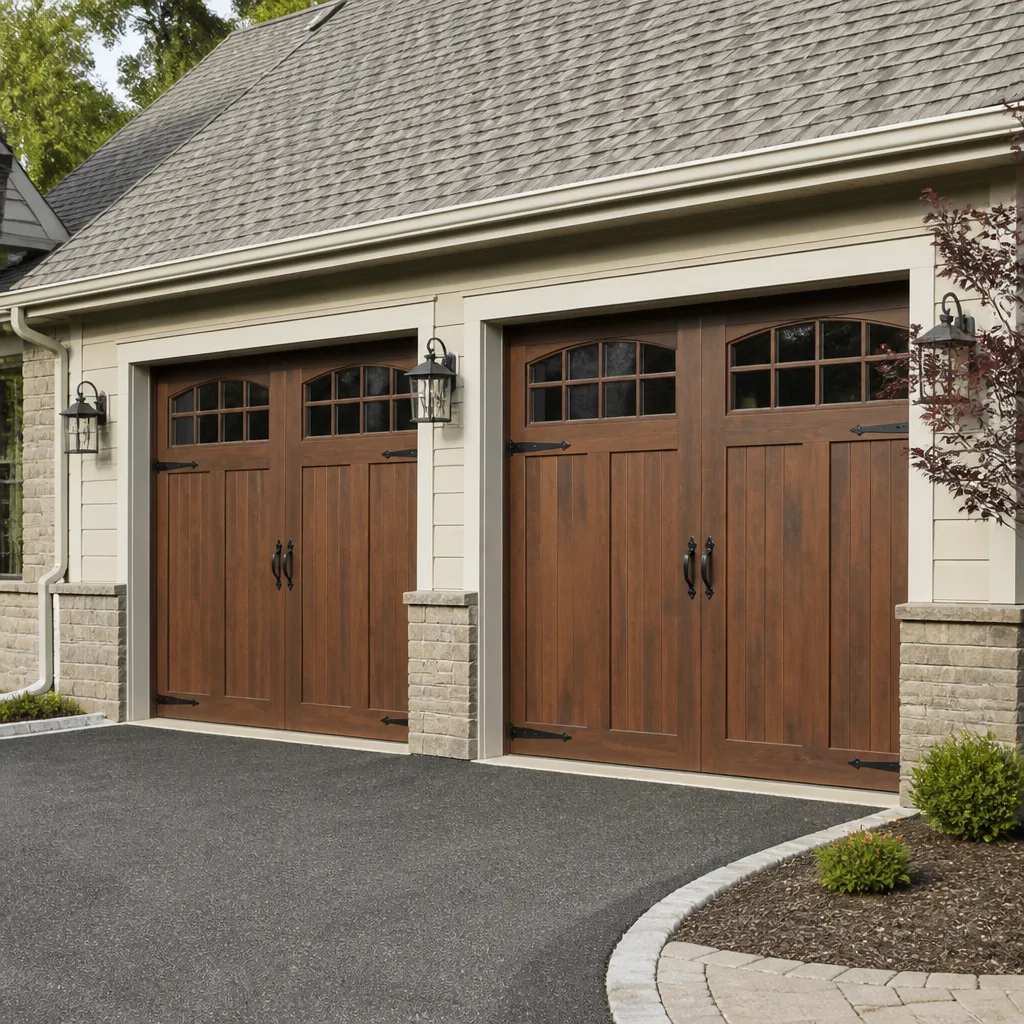 Carriage house
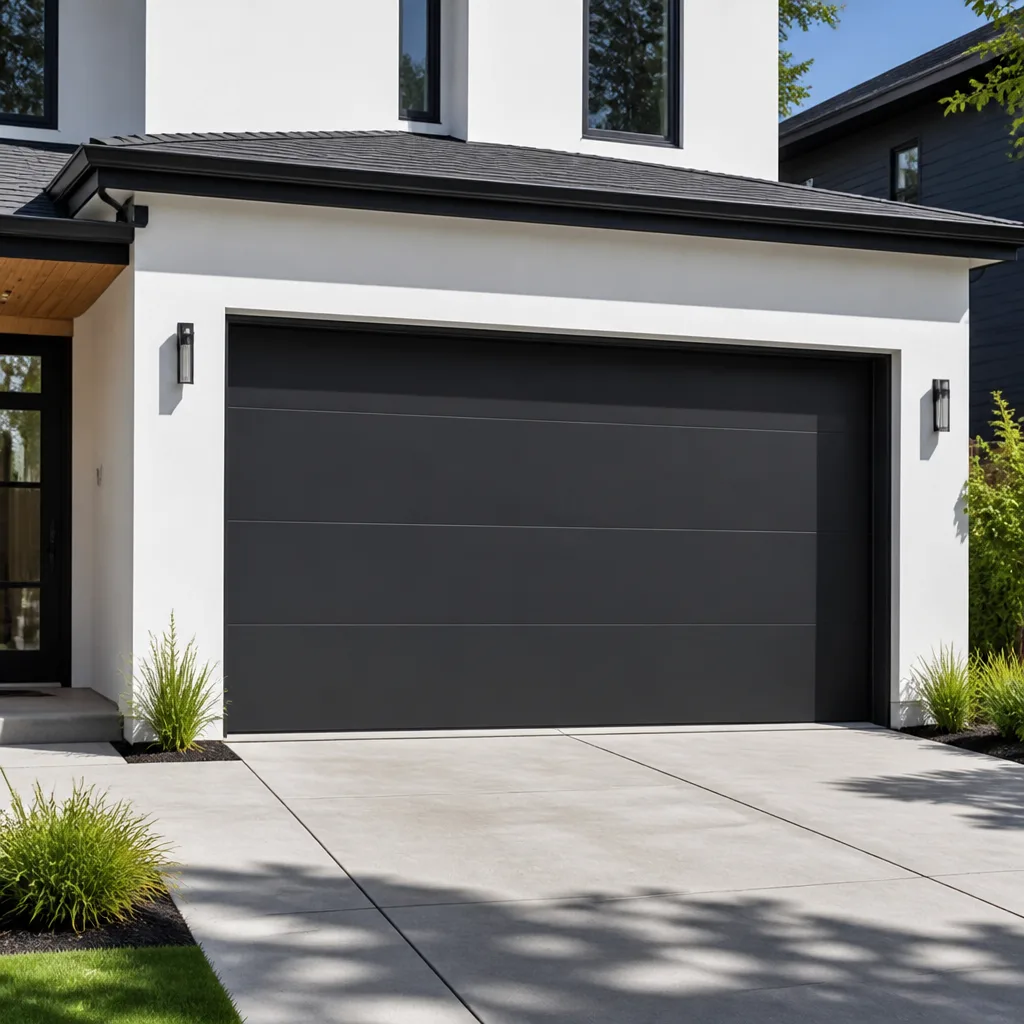 Modern flush
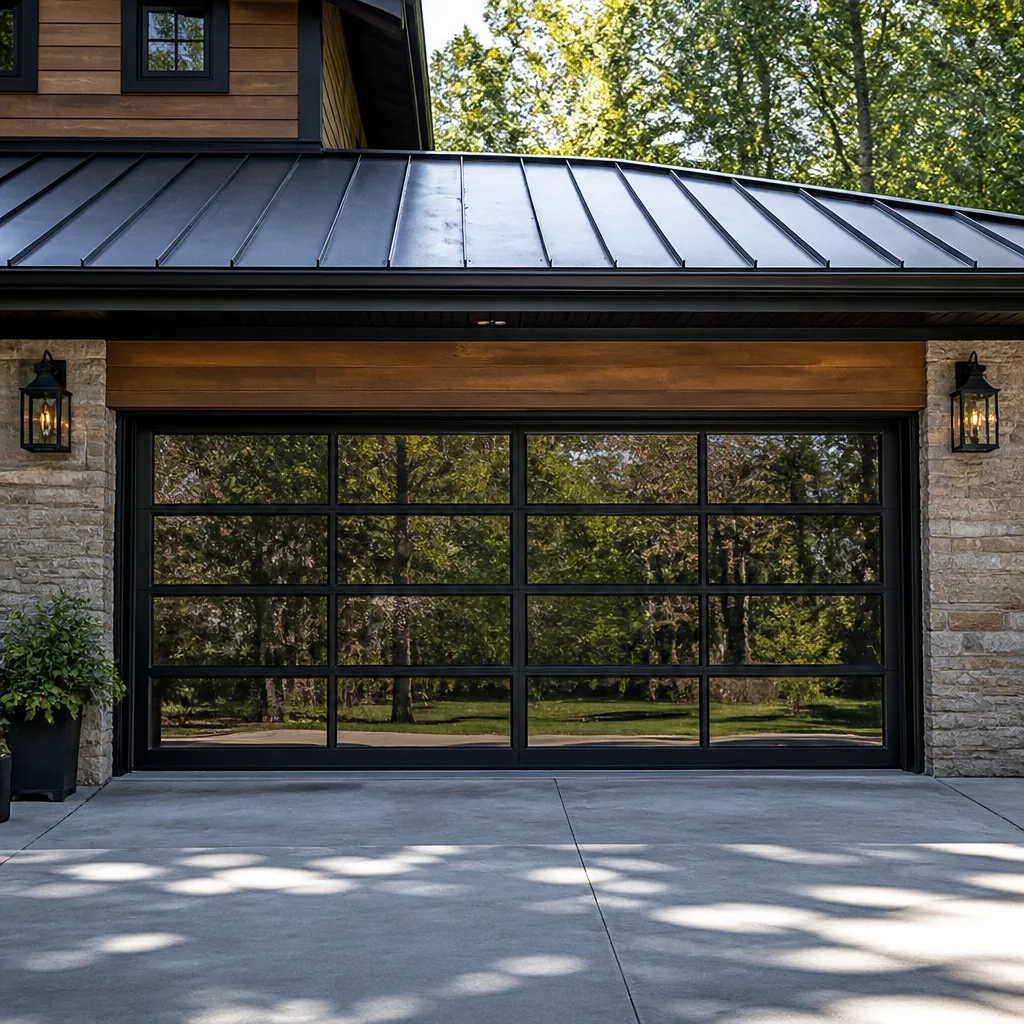 Full-view glass
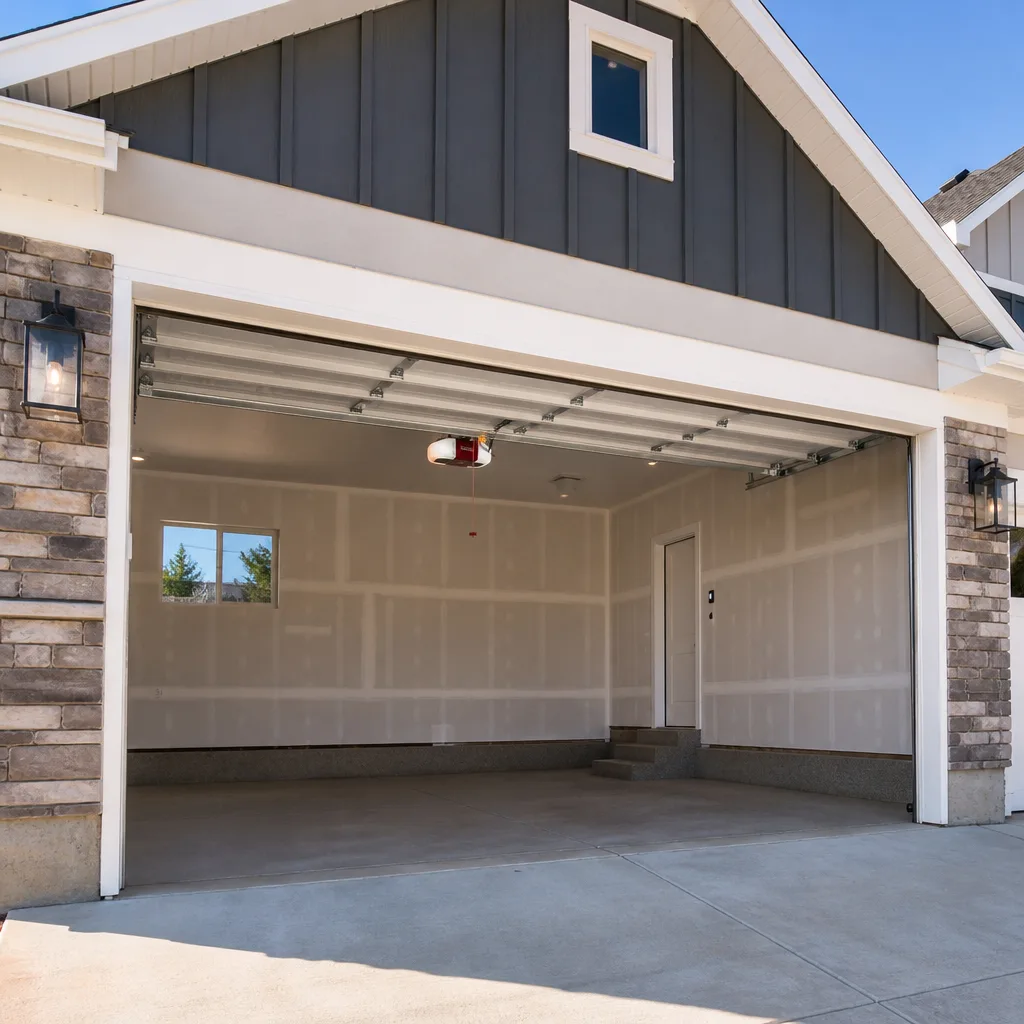 LiftMaster openers
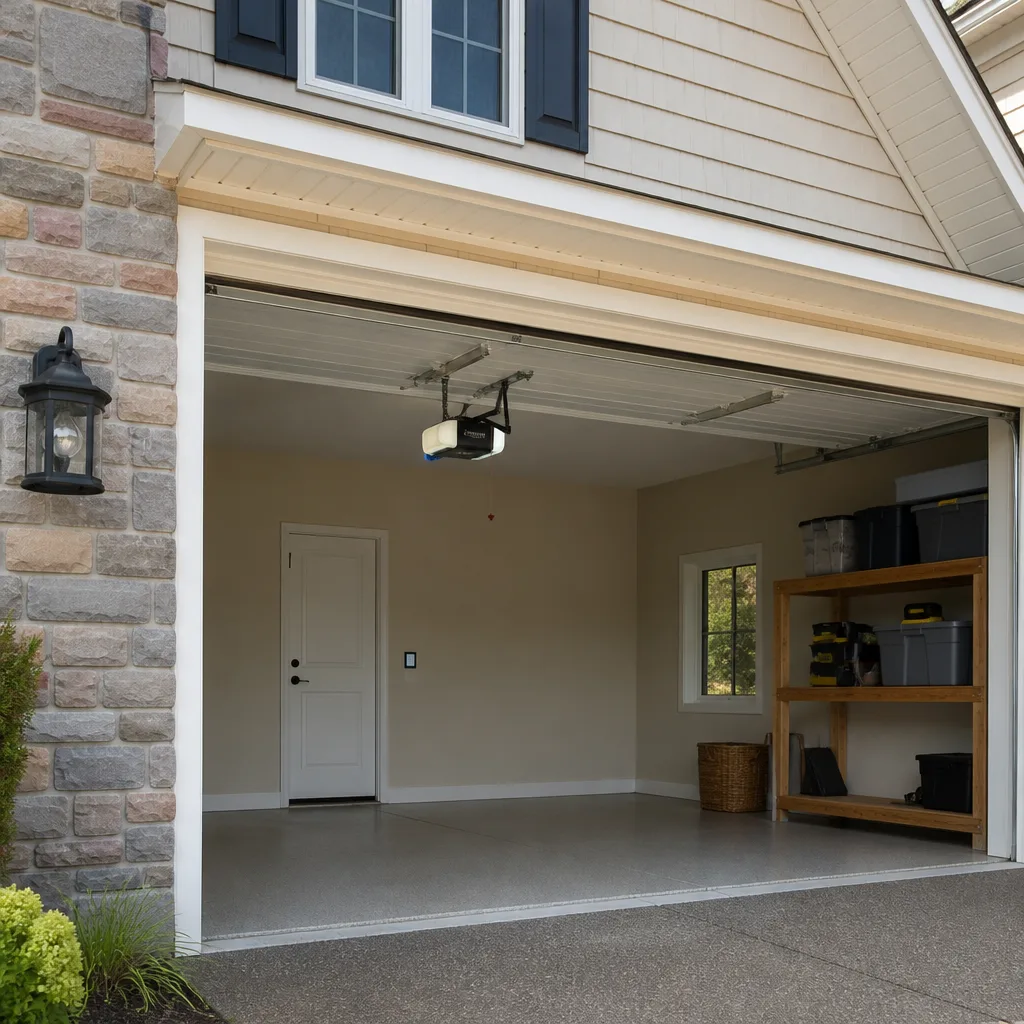 Chamberlain openers
Full 25-point door and opener safety check with every visit - springs, cables, rollers, tracks, and your LiftMaster or Chamberlain opener included
You get a price before we start. It does not change when the truck arrives.
Get your free estimateGarage Door Warning Signs: A Escondido Homeowner’s Reference Guide
In fifteen years of repairing garage doors across North County, we’ve learned something that surprises most Escondido homeowners: a garage door almost never fails without warning. The snap of a torsion spring, the jolt of a dropped panel, the silence of a dead opener – each was preceded by weeks or months of smaller signals. A slight hesitation at the halfway mark. A new sound you’ve started to tune out. A door that hangs one degree off level. This guide decodes those signals in plain mechanical terms: what they mean, which component is talking, and when a warning needs to become a phone call. For more guides & resources, see our blog.
Styles & brands we work with
Quick Answer
The most common garage door warning signs in Escondido are grinding or popping noises from the opener, squealing from the rollers or hinges, a door that hesitates or reverses at a specific height, visible gaps in torsion spring coils, and fraying on the lift cables. If you’re planning a larger project, read our guide on How to Hire a Garage Door Contractor in Escondido: A Step-by-Step Guide first. Any of these means a component is working harder than it should. Ignored, they lead to snapped springs, stripped gears, or a door that won’t open on a morning you need to leave. Some are warnings you can schedule; others mean stop using the door today. We’ll explain which is which.
Table of Contents
- The Sound Diagnostic Index: What Noises Actually Mean
- Visual Symptoms: Gaps, Frays, and What Your Door Shows You
- Behavioral Signs: How the Door Moves Tells You More Than How It Sounds
- The “Working Harder” Indicators: Strain You Can’t Feel Yet
- Why Escondido’s Climate Accelerates Certain Failures
- Response Triage: Call Today, Schedule Weekly, or Stop Now
- What Your Brand of Door Is Trying to Tell You
- Common Mistakes to Avoid
- When to Call a Professional
- Frequently Asked Questions
- The Bottom Line
The Sound Diagnostic Index: What Noises Actually Mean
A grinding noise from your opener and a grinding noise from your track require completely different repairs. Most Escondido homeowners, and plenty of generalist handymen, hear “grinding” and assume the opener is failing. Sometimes it is. Sometimes the noise has nothing to do with the motor at all. Sound is the first diagnostic tool a trained ear uses, and different noises point to different subsystems.
Here’s the index we use on service calls throughout Escondido, from Valley Center-adjacent hillsides down to the flat streets near Kit Carson Park:
- Grinding from the opener head: This almost always means the drive gear inside the motor unit has begun stripping. Genie and older Craftsman openers tend to show this pattern first. The gear teeth wear down over years, and the motor turns against a surface that no longer grips. The fix is a gear replacement or, if the opener is beyond economical repair, a new unit. It will not heal itself.
- Grinding from the track or near the floor: A different animal. This is usually a roller that’s lost its bearing and is dragging metal against the track instead of rolling. Or the track itself has accumulated enough dust and grit, common in Escondido’s dry months, that the rollers are fighting the buildup. Repairing the roller is cheap; ignoring it turns the track into a wear surface that eventually needs replacing.
- Popping or snapping during operation: This is the sound of a torsion spring releasing tension, usually at the moment of failure. A loud single pop followed by a door that won’t lift is a broken spring. A series of smaller pops while the door travels can indicate the spring is binding against itself or the center bearing is failing. Either way, a popping spring is the closest thing a garage door gives to a warning shot.
- Squealing or high-pitched whine: Rollers and hinges. Nylon rollers don’t squeal; metal rollers with worn bearings do. The sound often gets worse in Escondido’s summer heat as lubricants evaporate faster. Start with the rollers. If lubricating doesn’t quiet it within a day, the bearings are shot and replacement is the honest fix.
- Rattling during opening or closing: Loose hardware. Bolts work themselves out over hundreds of open-close cycles, especially on the hinge plates that connect panels. A rattle you can duplicate by pushing the door gently with your hand tells you where to look. Tightening is a maintenance fix, but consistently loose hardware means the door is shaking more than it should – often a balance problem, not just a fastener problem.
The point isn’t to turn you into a technician. It’s to give you a language for what you hear. When you call Garage Door Repair in Escondido and say “it’s a grinding noise from the head, not the track,” you’ve already half-diagnosed the job. More importantly, you haven’t mistaken one problem for another.
Visual Symptoms: Gaps, Frays, and What Your Door Shows You
Your garage door hides no secrets if you know where to look. Every major component wears in a visible way before it fails. The trick is knowing which gap matters and which is normal.
Gap in the torsion spring coil. A healthy torsion spring is a continuous coil. When you see a physical separation in the coil – a place where the metal has actually pulled apart – the spring is broken. End of diagnosis. A spring with a gap is not going to reattach itself, and it will not somehow “hold” with less tension. This is the single clearest stop-using-the-door signal in the visual catalog. On Escondido homes built in the 1980s and 1990s, the original springs are often at or past their rated cycle life, and we see this pattern regularly on doors that get daily use.
Gap under the door when closed. This usually means the bottom seal (the rubber strip along the door’s bottom edge) has hardened, cracked, or pulled away from the track it sits in. Escondido’s dry summer air and cool winter nights accelerate rubber aging. The seal’s job isn’t cosmetic – it keeps out dust, insects, and water during the rare hard downpour. A visible strip of daylight under the door is the fix-it-this-month signal.
Gap between panels. If the spaces between the horizontal panels of the door look uneven – tight at one end, wide at the other – the door is racking. This means uneven weight distribution, usually from a weakening spring or a cable that’s starting to slip. The panels themselves aren’t the problem; the support system holding them square is failing. If you see this, don’t tighten the panel bolts and call it fixed. The imbalance is the issue.
Frayed lift cables. Look up at the cables running from the bottom corners up to the drums above the door. If you see any individual wires poking out, twisting, or rust-staining along the cable, that cable is counting down. A frayed cable isn’t on a schedule – it can snap the next time the door opens or six months from now. But when it snaps, it takes the door out of commission and often the spring with it. We treat any visible fraying as a repair-worthy finding on the spot, not a “keep an eye on it” item, because of how quickly a cable failure escalates.
Rust on the tracks or hardware. Coastal-adjacent humidity and Escondido’s warm daytime temperatures create a corrosion cycle that accelerates in garages with poor ventilation. Surface rust on tracks is cosmetic; rust that causes rollers to bind or hinges to seize is structural. If you see flaking rust around a hinge pin or a roller stem, that part’s load-bearing capacity is compromised.
Behavioral Signs: How the Door Moves Tells You More Than How It Sounds
A door that looks fine can be failing, and a door that moves in a way it didn’t used to – even silently – is telling you something mechanical. Watch your door while it travels. Compare what you see with what you remember from when the door was new.
Slow reversal or a door that won’t reach the floor. When a door starts descending, then reverses back up without touching anything, the opener’s force settings or the safety sensors are usually the culprit. But when the reversal happens at the same spot every time, on an older door, the cause is often structural: a hinge binding, a track that’s pinched, or a spring that’s weakened enough that the opener reads the extra resistance as an obstruction and reverses. On doors near Escondido’s older neighborhoods – think the 1970s-era homes in North Escondido – track alignment shifts are one of the most common pre-failure findings we see.
Hesitation at a specific height. Note where the door hesitates. If it’s the same spot every cycle, something physically lives in that section of track or interacts with the door’s travel there – a bent roller, a misaligned track segment, a hinge that grabs. Hesitation is noise-free speech: the door is working harder at one specific point in its travel. That’s not a quirk; that’s a future repair pointing at you.
One-side sag when opening. Stand back and watch the door’s bottom edge as it rises. If one corner consistently lags, that’s a spring-balance or cable problem on one side. The door may close flat and only reveal the sag under load. A balanced door rises evenly; an unbalanced one twists. Over weeks, that twist wears the rollers and the tracks unevenly, turning a spring adjustment into a multi-part repair.
The “Working Harder” Indicators: Strain You Can’t Feel Yet
This is where homeowners get fooled. A door with a failing spring doesn’t necessarily slow down. A cable on its last strands doesn’t visibly sag. An opener with a wearing gear doesn’t stop lifting. They just work harder, and the evidence is in the components you don’t see unless you know to look.
Opener strain you can hear but not name. Listen for the pitch of the opener changing over a cycle. A motor that starts strong and fades, or one that seems to labor through the same section every time, is up against rising friction or failing balance. The opener’s motor is doing the work the spring used to help with. That’s the definition of runaway workload – and the fastest way to reduce a garage door opener’s life by half.
Cable fraying that still “works fine.” A lift cable doesn’t announce its last days. It shows them: individual wires relaxing out of the braid, a slight narrowing at a wear point, rust stains at the bottom bracket. The cable still lifts because it hasn’t reached its breaking point yet, not because it’s healthy. We’ve pulled cables on Escondido jobs that looked fine from six feet away and were carrying 40 percent less working strand than the label rated.
Worn cable drums that look “okay.” The drum at the top of the door is where the cable wraps. With wear, the grooves deepen and the cable can ride out of its channel, or stack unevenly. That uneven stacking changes the cable’s take-up length, which changes the door’s balance, which strains the spring. It’s a cascade that starts with a component most people never look at. If your door seems to close hard on one side, get the drums checked as part of the diagnosis.
Bottom brackets that have moved. The bottom bracket anchors the cable to the door panel. When the bolts loosen, the bracket can shift, changing the angle the cable pulls at. It still “works” in the sense that the door opens – but the stress is now concentrated oddly, and the next failure may be the bracket ripping out of the panel instead of a simple bolt-tightening.
We see these four worn-but-functional failures constantly in Escondido, especially on doors that go through multiple open-close cycles per day – and plenty of Escondido garages serve as daily entry points, not just car storage. The door gets used more than the springs were ever spec’d for. That’s exactly the context in which “working harder” indicators matter.
Why Escondido’s Climate Accelerates Certain Failures
Garage door components are outdoor equipment, and Escondido gives them a specific kind of beating. Inland heat, low humidity for much of the year, and the occasional heavy rain event combine to create failure patterns that a technician in, say, coastal Carlsbad simply doesn’t see as often.
Heat cycling and spring fatigue. Torsion springs are rated in cycles, not years – a 10,000-cycle spring in a garage with two cars and daily use lasts about twelve to fourteen years under ideal conditions. Escondido’s summer heat causes the metal to expand and contract across a wider range than coastal areas see, and that thermal cycling accelerates fatigue at the spring’s crystalline structure level. We regularly replace springs on Escondido doors that haven’t hit their rated cycle count but have been through enough hot summers to fail early.
Rubber and seal degradation. Bottom seals, weatherstripping, and the rubber strips on the sides of the door harden and crack in sustained dry heat. A seal that’s still pliable at five years in a humid climate may be brittle and cracked at three years in Escondido. That’s not a defect; it’s the environment. Inspect the seal every spring, not when you notice leaves or water inside the garage.
Dust and track wear. Escondido sits in a valley, and between the Santa Ana winds and the regular summer dust, grit finds its way onto horizontal surfaces. Track lubricant attracts dust; dust mixed with lubricant creates an abrasive paste; the paste grinds rollers and rails. If you park on a dirt driveway or live near any open field, check your rollers twice as often as a homeowner on a sealed suburban street would need to.
Rain events and cable corrosion. When it does rain hard in Escondido, water that runs under the door or collects at the bottom edge accelerates rust on cables and bottom brackets. The cables sit at the lowest point of the assembly. They get wet first and stay wet longest. Any sign of rust staining on the cable wire means water has been getting to it – and the lifespan is now shorter than the manufacturer intended.
Response Triage: Call Today, Schedule Within a Week, or Stop Now
Every warning sign falls into one of three categories. The difference is risk. Here’s the triage we recommend, based on what we see escalate on Escondido service calls.
Stop using the door immediately (call today):
- A visible gap in any torsion spring coil. The spring is broken. The door may still open – that’s the opener lifting the full weight of a door it was never designed to carry alone. Every cycle risks the cables snapping, the door dropping, or the opener burning out.
- Loose or broken lift cable. If one cable has snapped, the door is being lifted from one side only. It will rack, bind, and eventually wedge. If a cable is visibly frayed and releasing strands, treat it as a break waiting to happen.
- Door hangs visibly crooked when closing. One side is lower than the other. This may mean a cable has already slipped off a drum or a spring has failed on one side. It will not correct itself.
- Loud pop followed by the door not operating normally. A spring snapped. See item one.
Schedule within a week:
- Consistent grinding from opener or rollers. The damage is ongoing but not catastrophic. Waiting months turns a $100 roller replacement into a $400 track job, or a $250 gear job into a $600 opener replacement.
- Hesitation at a specific height on every cycle. Something is binding. The longer the bind wears, the more parts are involved in the eventual repair.
- One-side sag during opening that disappears when closed. A balance or cable issue that’s developing. Fix it before it becomes the “stop now” category.
- Rust on cables with visible strand damage. The cable hasn’t failed yet, but the clock is running. Replace it on your schedule, not the cable’s.
Monitor and maintain (schedule at your convenience):
- Slow opening or closing with no other symptoms. Could be a lubrication issue or an opener speed setting. Worth checking, not urgent if movement is smooth.
- Rattling only during certain weather conditions. Thermal expansion can change how hardware fits. If it goes away in consistent weather, identify the source and tighten.
- Bottom seal hardened but no visible gap. The seal is losing flexibility but still sealing. Replace before Escondido’s next rainy season.
The pattern is simple: springs and cables demand immediate respect. Noises and hesitations get a window. Seasonal wear and tear get a calendar. Know which category your symptom lives in, and act accordingly.
What Your Brand of Door Is Trying to Tell You
Different manufacturers build doors with different design philosophies, and those philosophies produce characteristic failure patterns. If you’re shopping for a new door, our Choosing the Right Garage Door Brand: A Buyer’s Guide for Escondido breaks down what matters. We work across the major brands daily, and certain symptoms show up more often on certain doors.
Amarr doors tend to use heavier-gauge steel and hold their panel alignment well, but the torsion systems on older Amarr-installed doors in Escondido frequently show spring fatigue right around the 12-to-14-year mark. If you have an Amarr door from the mid-2000s and you’re hearing a faint popping, get the spring inspected now rather than running it to failure.
Wayne Dalton models – especially the ones with the TorqueMaster spring system hidden inside a tube – fail differently. You won’t see a visible gap in the spring, because the spring is enclosed. Instead, you’ll notice the door getting harder to lift manually, or an opener that labors. The TorqueMaster system was discontinued on most new installs for a reason: the internal spring gives less warning, and the repair path is less straightforward than a standard torsion conversion.
Craftsman doors, common across older Escondido neighborhoods, are often paired with openers of the same era. The signs on a Craftsman tend to be classic: grinding opener gears, metal-roller squeal, and hinge plates with loosened bolts. There’s nothing exotic about the failures. They’re simply old, and old components follow the same pattern: the earliest warning is noise, then visible wear, then mechanical failure. The sequence is predictable if you’re paying attention.
The brand matters because the diagnostic path differs. A Wayne Dalton homeowner who waits for a visible spring gap will never see one; the dead spring stays hidden. Knowing what your door’s failure pattern looks like – that’s the practical benefit of working with people who see Garage Door Installation in Escondido every week across all the major brands. We know what your brand of door says before it breaks.
Common Mistakes to Avoid
- Lubricating a noisy opener without diagnosing the noise. If the gear is stripping, lubricant just masks the sound for a week and lets the damage continue. Noise is data. Don’t erase data.
- Ignoring a popping sound as “just the door settling.” Doors don’t settle. Popping is tension releasing or a component binding, and it’s the most commonly ignored pre-failure signal we hear about on Escondido service calls.
- Trying to manually force open a door with a broken spring. A door with a broken spring weighs several hundred pounds. Pulling the emergency release and lifting against the full weight is how shoulders get injured and doors get bent. If the spring is broken, stop and call.
- Replacing one spring at a time on a two-spring system. If one spring has failed, the other has the same cycle count and the same fatigue. Replacing one saves money now and guarantees a second service call soon.
- Ignoring a door that hesitates “only sometimes.” A hesitation that comes and goes is still a bind, just one that depends on temperature or load. By the time it’s constant, more parts are involved.
- Assuming “the sensors are the problem” every time the door reverses. Reversals can come from the opener’s force settings reading a mechanical bind. Realigning your sensors won’t fix a hinge that’s seizing.
- Waiting until the door won’t open to call. This is the big one in Escondido. The call comes at 6 AM on a Monday when the car is trapped in the garage. Every warning sign above, if addressed early, costs less than the emergency version of the same repair. The door tells you when it’s failing. Listen before it’s shouting.
When to Call a Professional
The line between “I can handle this” and “this needs a technician” is usually drawn at the spring and cable level. Anything involving torsion springs, lift cables, or any repair where the door needs to be safely de-tensioned is not a DIY job. The stored energy in a wound torsion spring is enough to cause serious injury if released improperly. If you see a spring gap, a cable that’s loose, or any sign that the door’s balance is off, the right move is to stop using the door and make the call. Ironside Garage Door Repair home is based here in Escondido, and our technicians carry parts for the big brands on every truck. If your door is making sense now – if you can name the noise or spot the symptom – you’re already ahead of most homeowners. Garage Door Opener Repair in Escondido is our specialty alongside spring and cable work. We’ll give you a straight diagnosis and a fixed price before work starts. Call (855) 341-7752 for a free estimate.
Frequently Asked Questions
Garage door spring replacement in Escondido typically runs $180 to $340 for a standard torsion system, depending on spring size, cycle rating, and whether you replace one spring or both. Heavier doors and high-cycle springs push toward the top of that range. Call (855) 341-7752 for an exact quote before any work is scheduled – estimates are free and the price is agreed before we start.
In most cases, yes. Spring replacements, cable repairs, and roller replacements are jobs we carry parts for and can complete in a single visit. When the specific spring or component is unusual, we’ll tell you upfront and schedule the soonest available slot. For a same-day assessment, call (855) 341-7752.
A broken torsion spring shows a visible gap in the coil – the two broken ends separate and you’ll see a space where the metal should be continuous. On doors with a Wayne Dalton TorqueMaster system, you won’t see a gap because the spring is hidden inside a tube; instead, the door gets noticeably harder to lift manually.
A grinding noise from the opener head usually means the drive gear inside the motor unit is stripping. A grinding noise from the track area usually means a roller bearing has failed or the track is packed with dust. The two require different repairs, which is why a proper diagnosis matters before any work is quoted.
Once a year is reasonable for most Escondido homes, especially before the summer heat cycle begins. An annual inspection catches spring fatigue, cable fraying, seal degradation, and roller wear while they’re still cheap repairs. Doors used more than five times daily benefit from twice-yearly checks.
We strongly recommend against it. Torsion springs hold enormous stored energy, and incorrect de-tensioning is one of the most common causes of serious garage-related injuries. This is a job for a trained professional with the right winding bars and experience. The cost of professional installation is small compared to the risk.
The Bottom Line
Garage doors in Escondido fail on a schedule, but they announce their problems long before the failure happens. The grinding, the popping, the hesitation, the sag – each one is a component speaking in a specific language. Learn the sounds and the sights, and you’ll catch a $50 roller replacement before it becomes a $500 track rebuild, or a $200 spring replacement before it becomes a damaged panel and a trapped car. If you hear something new or see something off, trust the diagnostic and make the call. Straight diagnosis, your door’s actual problem, and a fixed price – that’s the standard. (855) 341-7752.
Written by the team at Ironside Garage Door Repair, serving Escondido since 2016.
See the difference
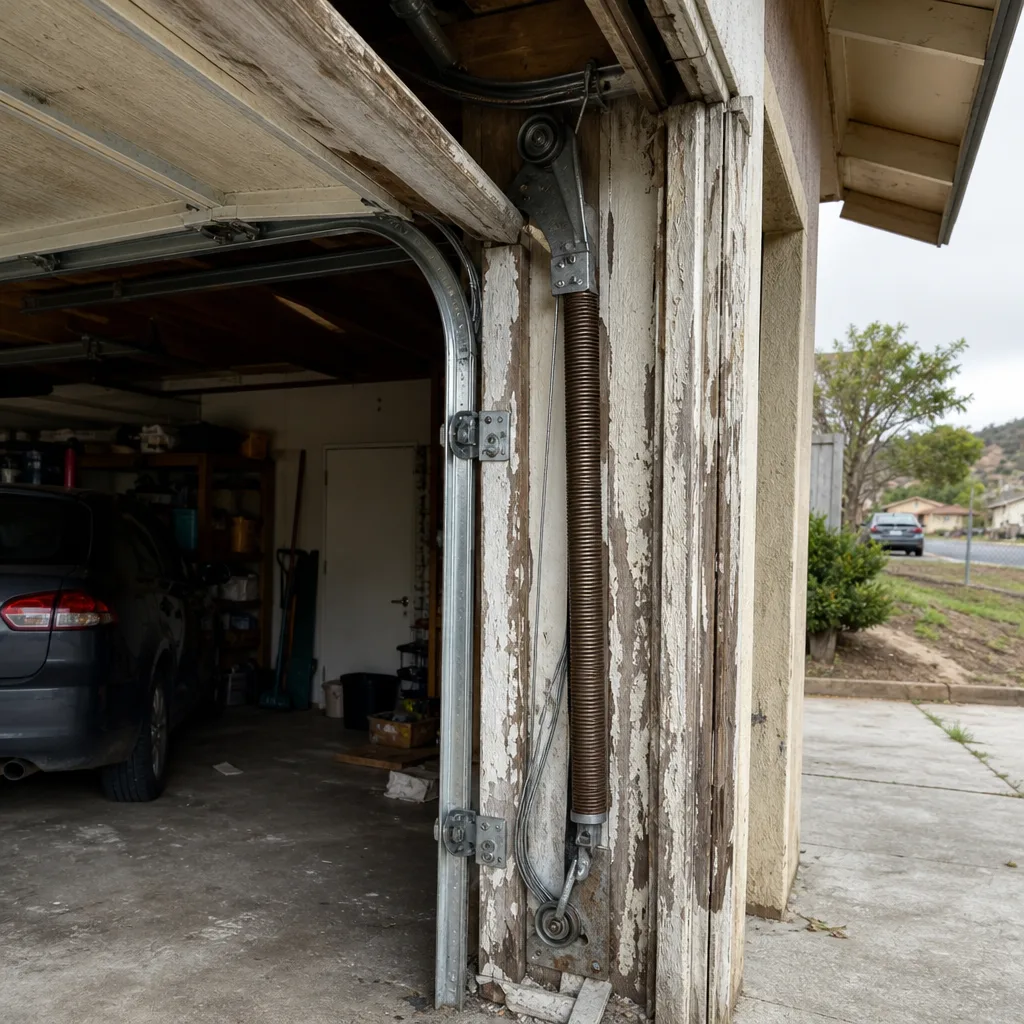 Before
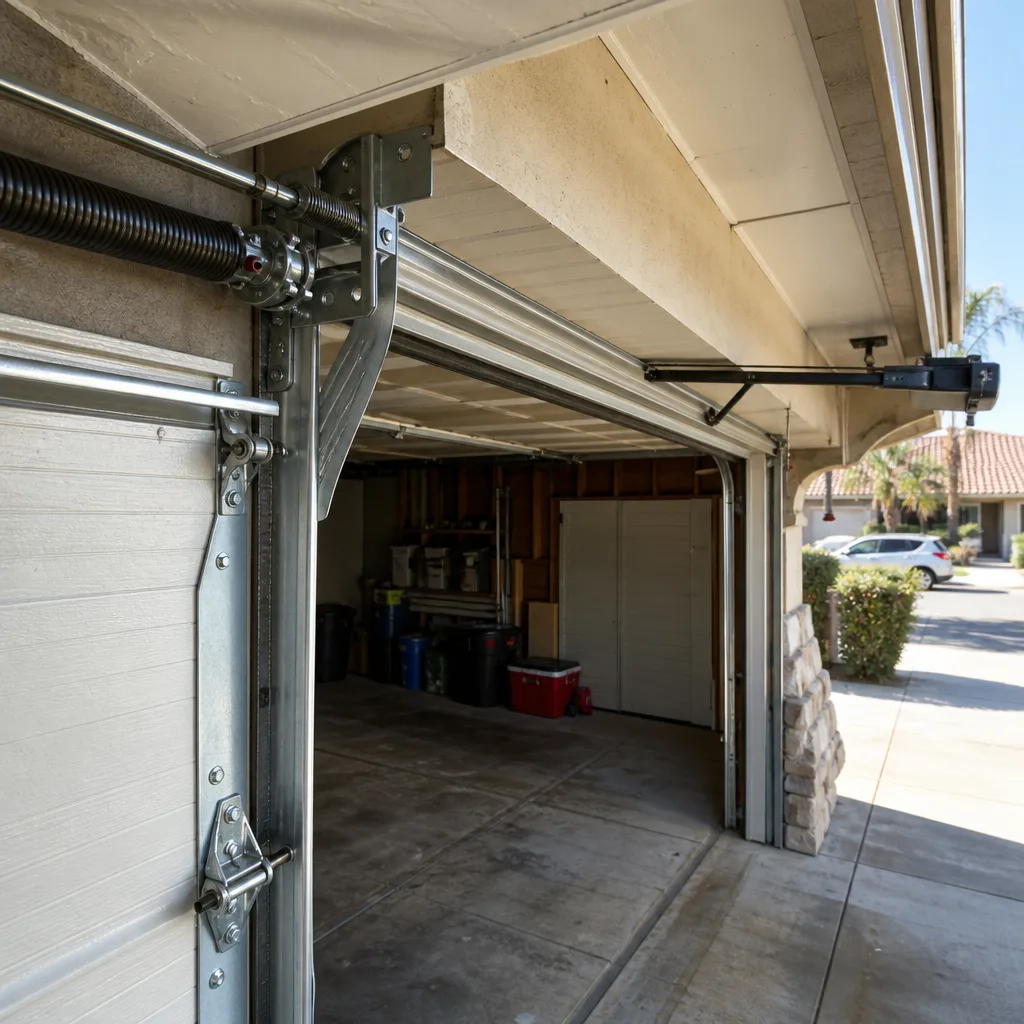 After
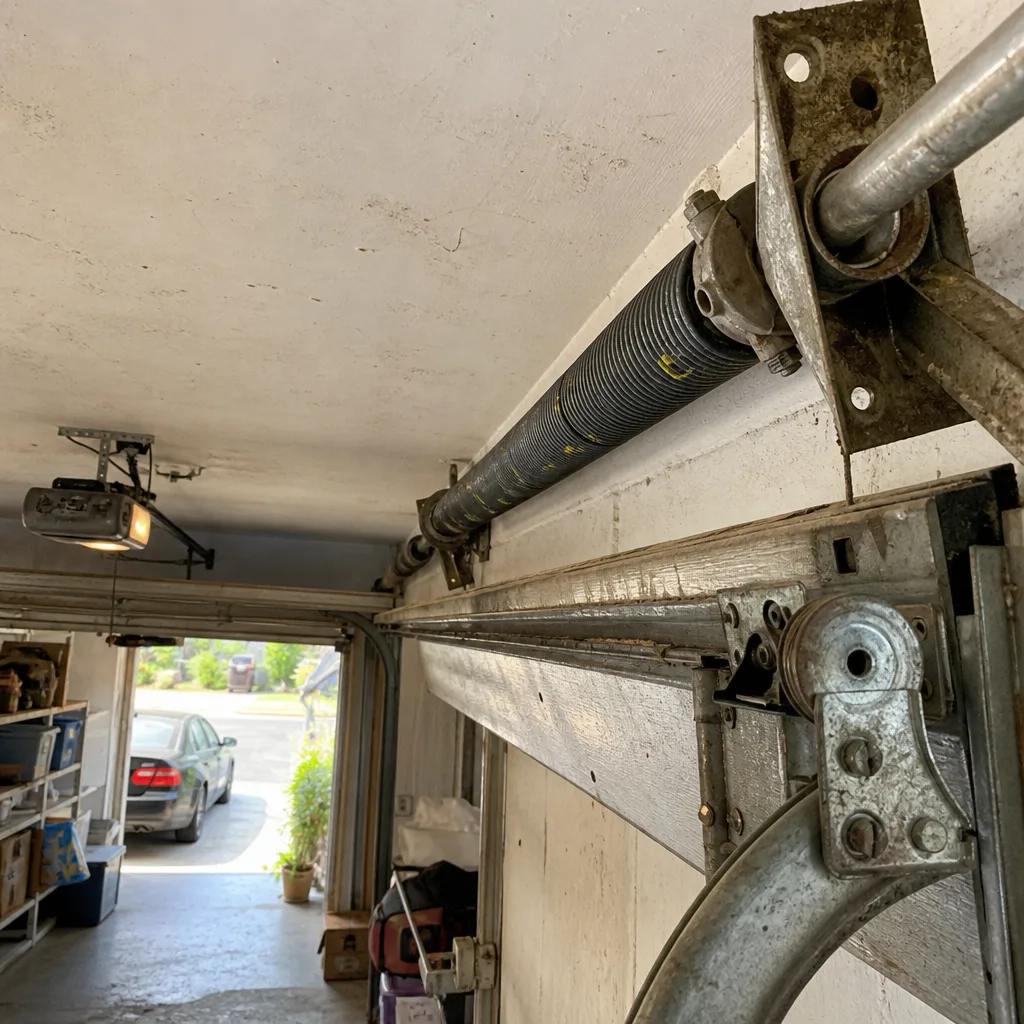 Before
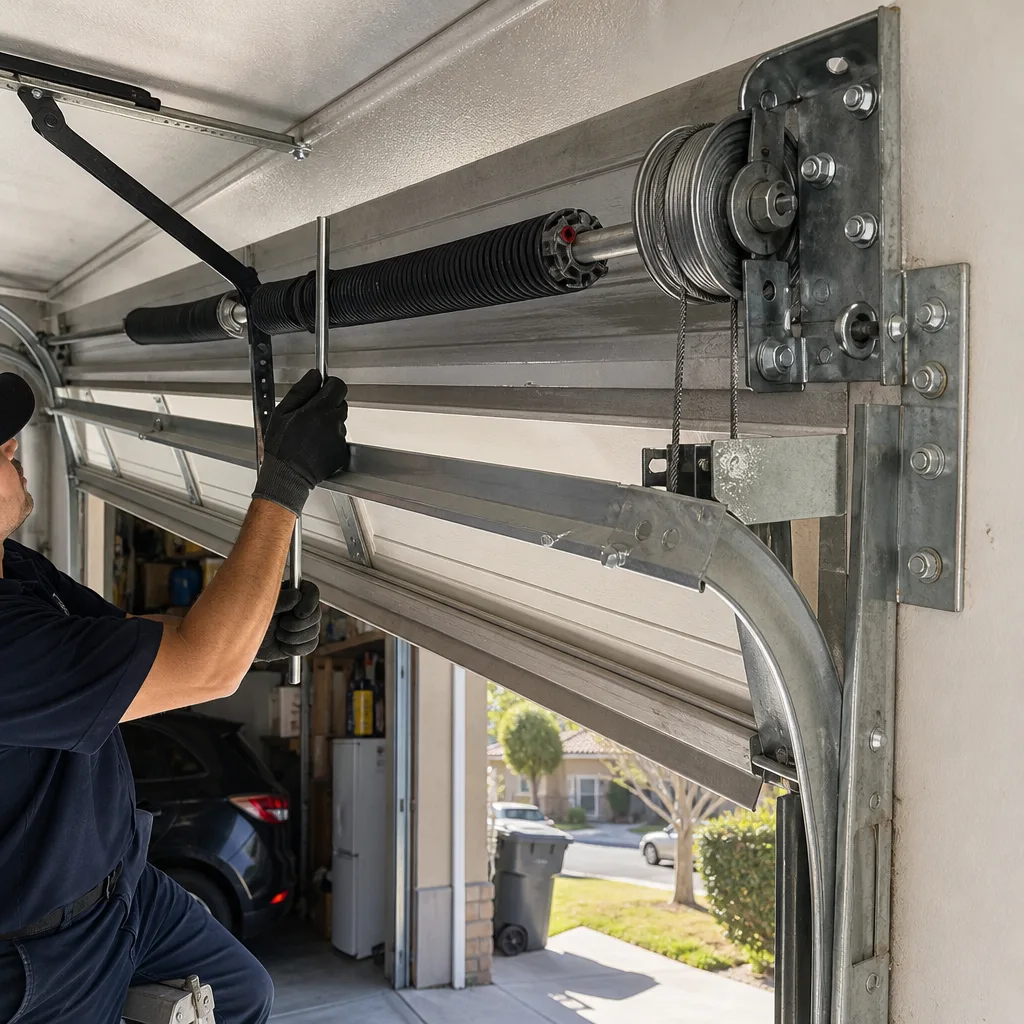 After
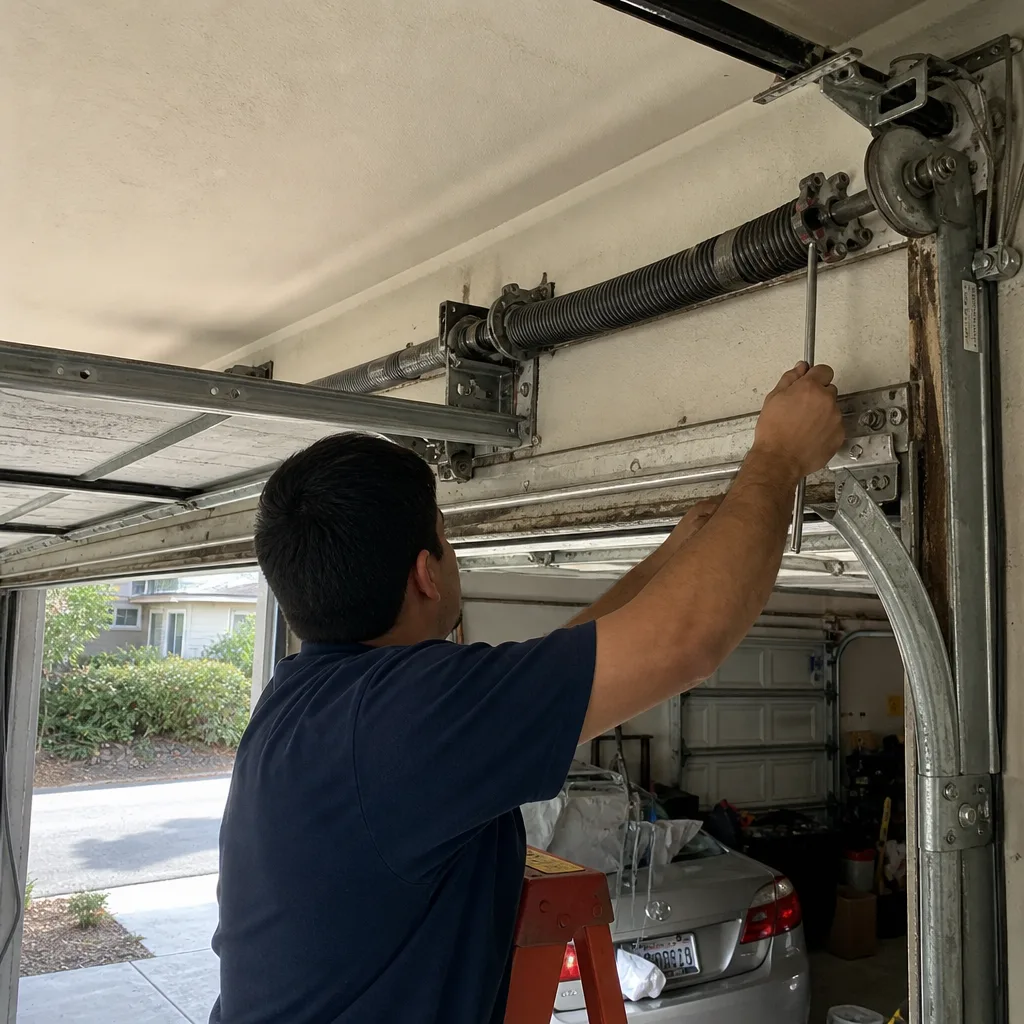 Before
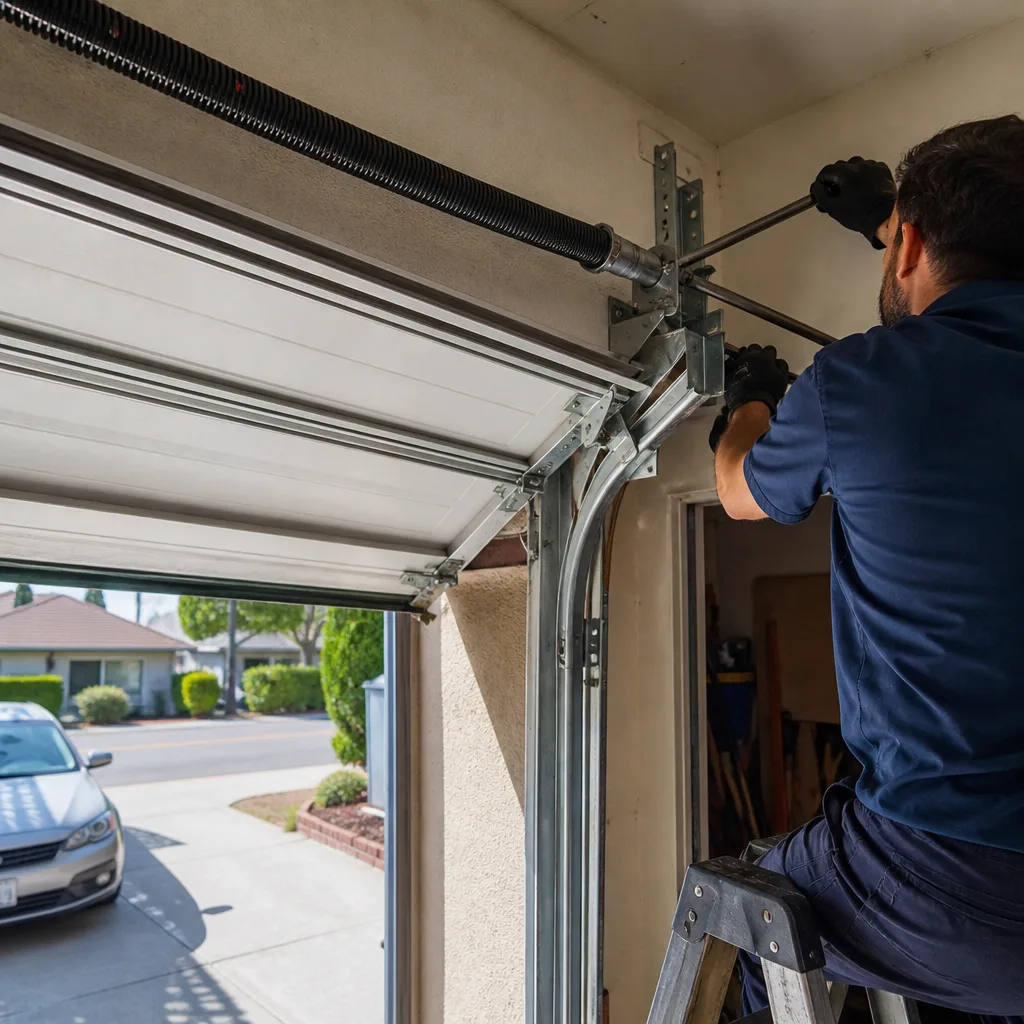 After