
Last updated October 31, 2026
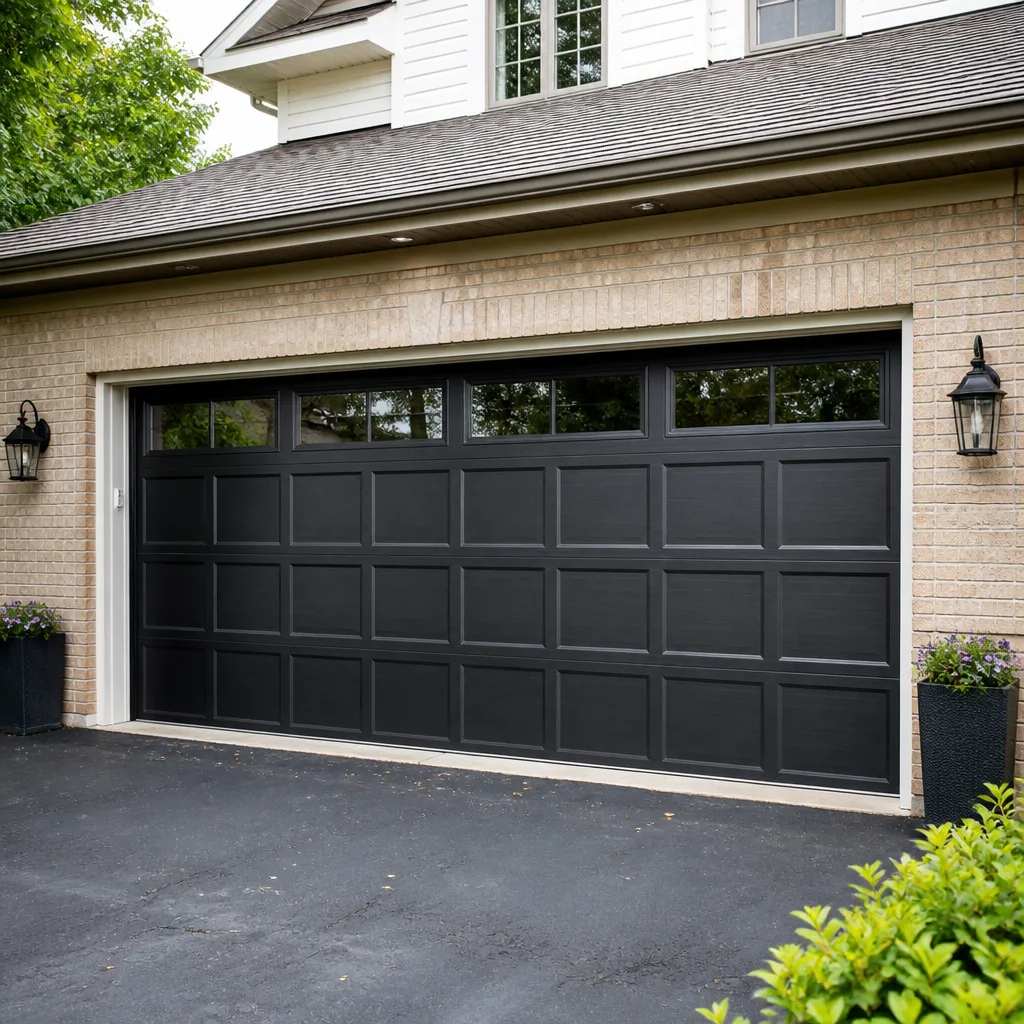 Raised-panel steel
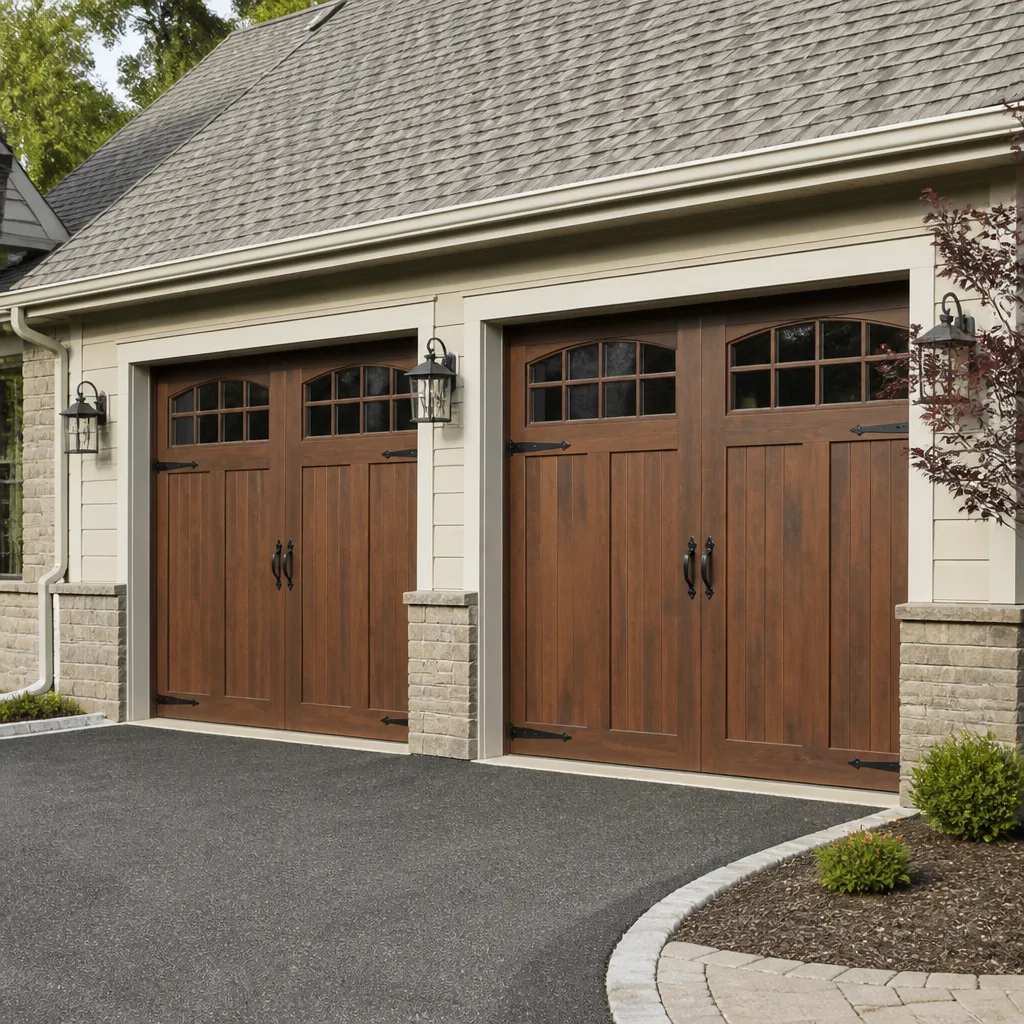 Carriage house
 Modern flush
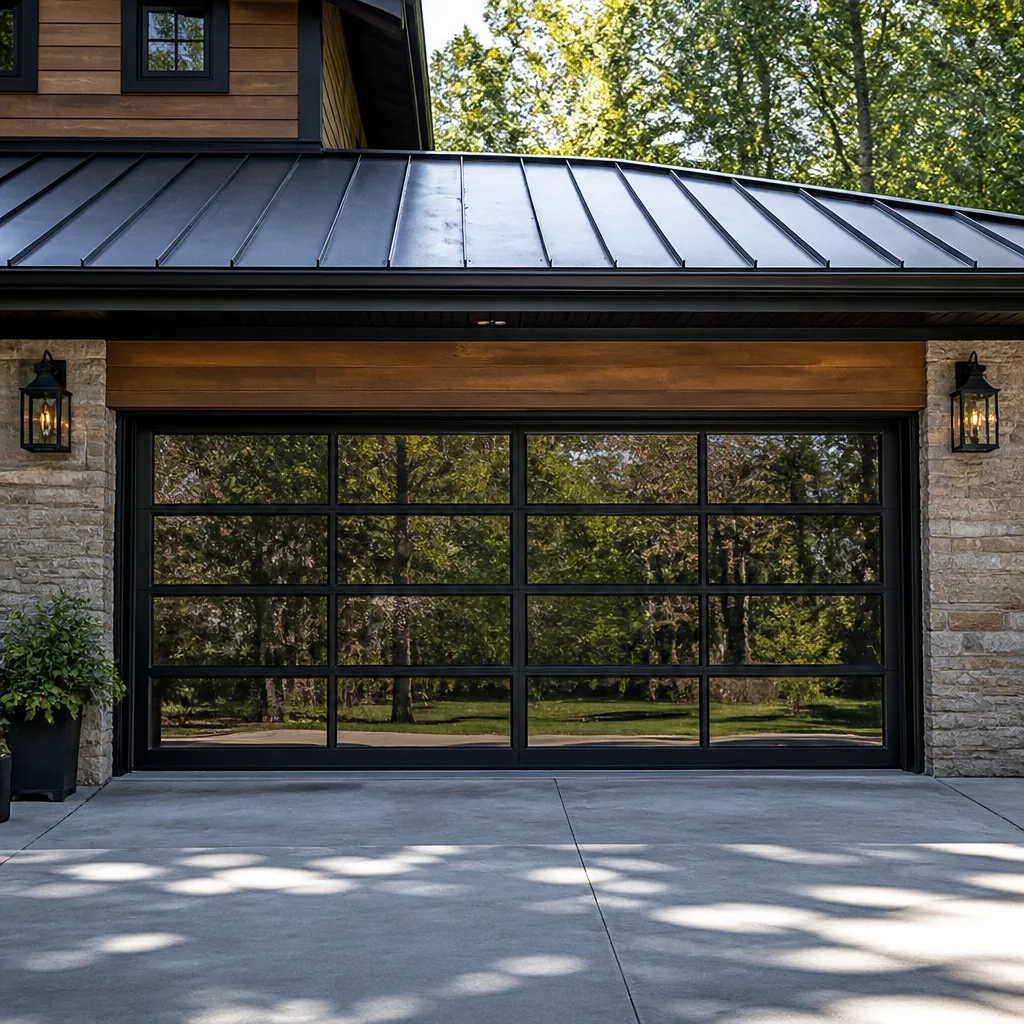 Full-view glass
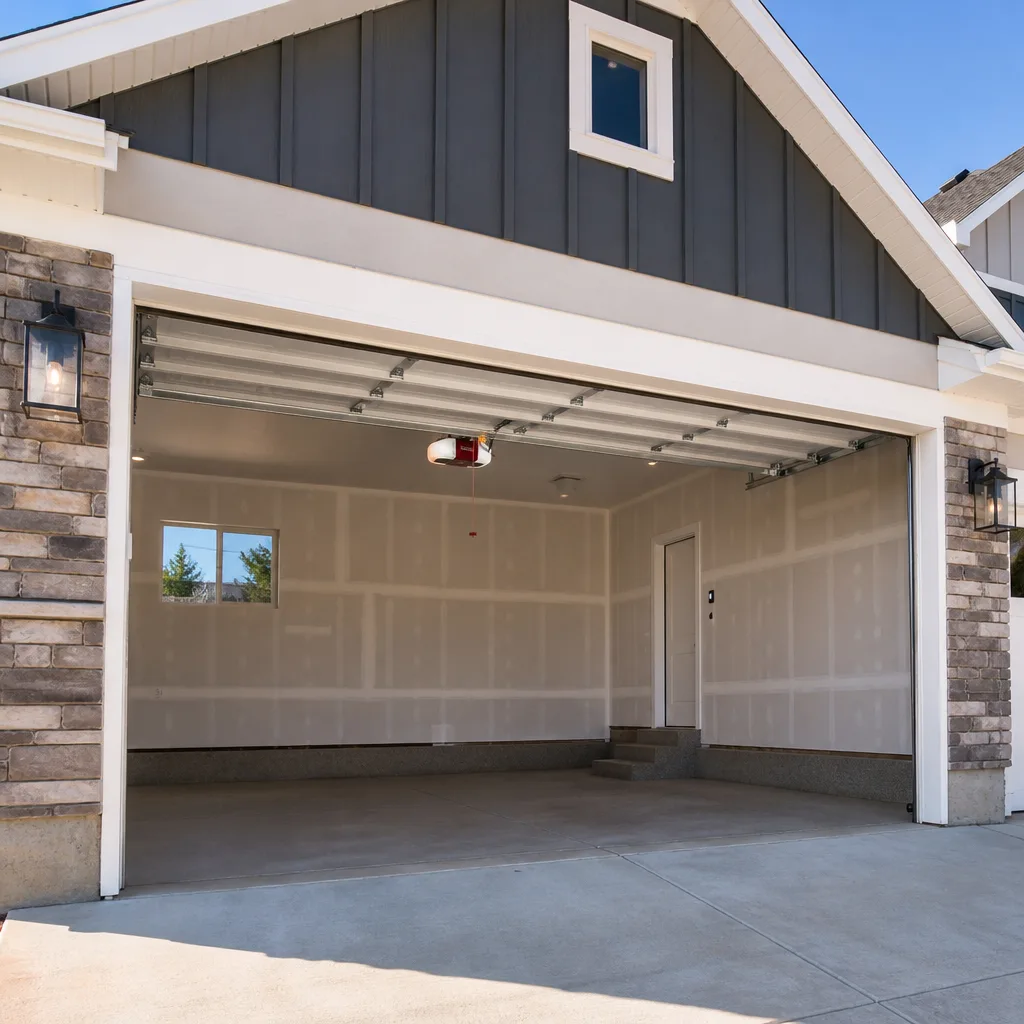 LiftMaster openers
 Chamberlain openers
Full 25-point door and opener safety check with every visit - springs, cables, rollers, tracks, and your LiftMaster or Chamberlain opener included
You get a price before we start. It does not change when the truck arrives.
Get your free estimateGarage Door Repair Maintenance Checklist for Escondido Homeowners
WD-40 on garage door rollers is one of the most common homeowner mistakes in the trade. It strips the grease that was already there and leaves a residue that attracts the exact grit that grinds your hardware down. In Escondido, where summer dust settles on everything and the dry air bakes lubricant into a sticky paste, using the wrong product turns a five-minute maintenance job into a two-hundred-dollar repair. This guide tells you precisely what to use, where to use it, and when to put the tools down and call someone who does this every day.
Quick Answer
A garage door maintenance checklist for Escondido homeowners should cover spring tension checks, track and roller inspection, lubrication with the correct products, balance testing, and hardware tightening. These tasks should be done every four to six months, with track and roller inspections doubled during the dusty summer months. If you find a frayed cable, a cracked spring, or a door that won’t hold position halfway up, stop and call a professional.
Styles & brands we work with
Table of Contents
- The Right Lubricant for Every Part
- Why Escondido Dust Changes Your Maintenance Schedule
- Spring Tension: What to Check and When to Stop
- The Balance Test That Protects Your Opener Motor
- Track and Roller Inspection Step by Step
- Hardware Tightening and Cable Inspection
- The Documentation Habit That Saves You Money
- Common Mistakes to Avoid
- When to Call a Professional
- Frequently Asked Questions
The Right Lubricant for Every Part
Garage door lubrication is not a one-product job. The metal-to-metal contact points on your door need different treatment than the rollers, and the opener rail has its own requirement. In our experience, most premature hardware failure in Escondido homes traces back to someone spraying a general-purpose product across everything and calling it done.
Here’s the breakdown:
- Garage door rollers (metal ball-bearing type): Use a white lithium grease spray. It clings to the bearing surfaces without running off, and it does not attract dust the way heavier greases do. Apply it to the ball bearings themselves, not the wheel face. One short burst per roller is enough. Over-lubricating is how you end up with grease flung onto the roller track, which becomes a dirt magnet.
- Rollers (nylon wheel with exposed bearings): Same white lithium grease on the bearing, or a silicone spray if the bearing is sealed and you’re just reducing wheel-to-track friction. Do not apply anything to the nylon wheel itself. The nylon runs dry against the metal track by design.
- Hinges: White lithium grease on the pivot points. Hinges are metal-on-metal and need a product that stays put under load. A quick shot at each hinge, then work the door up and down once to spread it.
- Torsion spring: A light coat of motor oil or a dedicated garage-door spring lubricant across the coils. The goal is rust prevention and reducing coil friction, not soaking it. Wipe away any excess with a rag. A spring that’s been neglected in Escondido’s dry air can still rust from condensation cycles in winter.
- Opener rail (chain or screw drive): White lithium grease for screw drives. For chain drives, a light machine oil on the chain itself. Read your opener manual if you have it. LiftMaster and Genie units have slightly different recommendations, and we see more rail wear from wrong product than from lack of lubrication.
- Weather seal and track edges: Silicone spray on a rag, wiped lightly along the inside of the track where the rollers ride. Less is more here. Spraying silicone directly into the track is how you get overspray on the door and floor.
One thing we tell every Escondido customer: if the lubricant you’re reaching for removes grease, it is not a lubricant for this application. WD-40 and similar penetrants have their place in loosening rusted bolts. Your garage door is not that place.
Why Escondido Dust Changes Your Maintenance Schedule
Coastal homes can get away with an annual garage door service. Escondido is not coastal. The inland valley sits dry most of the year, and the fine dust that blows through during summer works its way into every grease point on your door. Add heat that bakes lubricant into residue, and you’ve got a combination that accelerates wear in ways a standard checklist ignores.
We recommend this schedule for Escondido homeowners:
- Every 4 months: Inspect tracks, rollers, and hinges. Wipe down any visible grit accumulation. Re-lubricate only if the existing grease has thinned or turned dark and gritty.
- Twice per year (spring and fall): Full maintenance pass, including lubrication, balance test, spring tension check, and hardware tightening. Do the fall pass in October, after the heat breaks, so the door is clean and properly adjusted before winter condensation sets in.
- After any heavy wind event: Escondido gets Santa Ana conditions and occasional strong gusts through the valley. Wind-driven dust settles in tracks and on cables. A quick wipe-down of the track interiors and a visual check of the cables takes ten minutes and prevents grinding.
- Monthly during summer (June through September): Visually check the rollers and track for dust accumulation. If you park on a dirt driveway or live near open land in the San Pasqual Valley area, double this to every two weeks. The dust load in those neighborhoods is significantly higher than in central Escondido.
The rule is simple: dust is abrasive. Grease plus dust is sandpaper. In this climate, a door that goes six months without attention is running on contaminated lubricant for at least one of those months. We know your brand, and we know what this climate does to it.
Spring Tension: What to Check and When to Stop
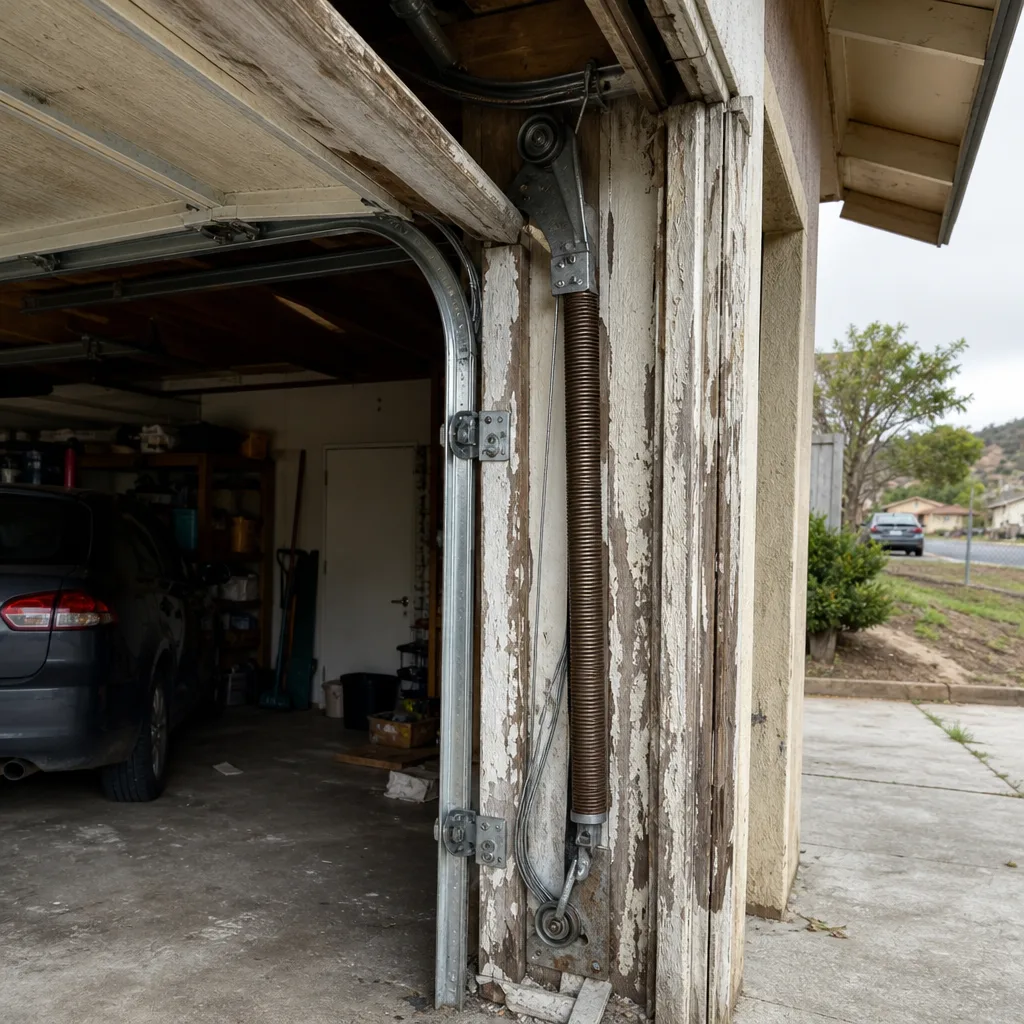
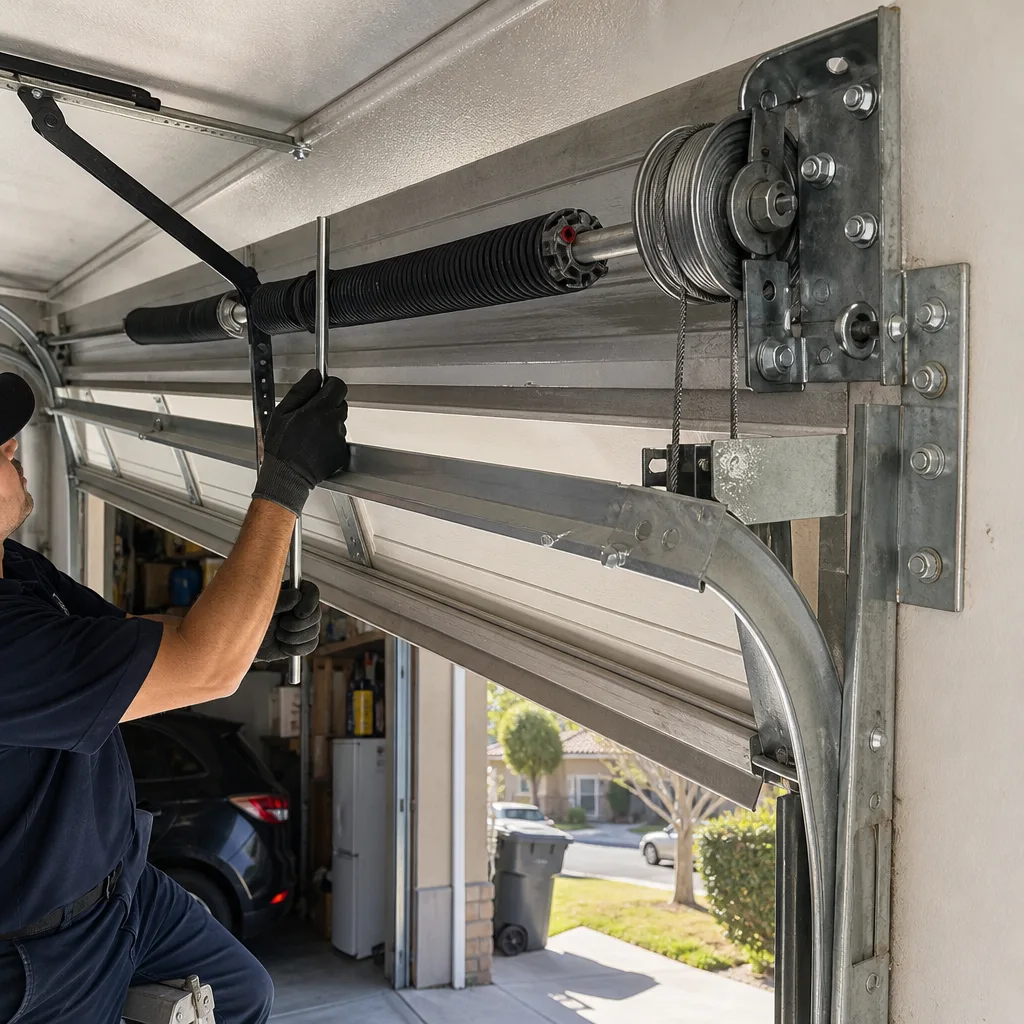
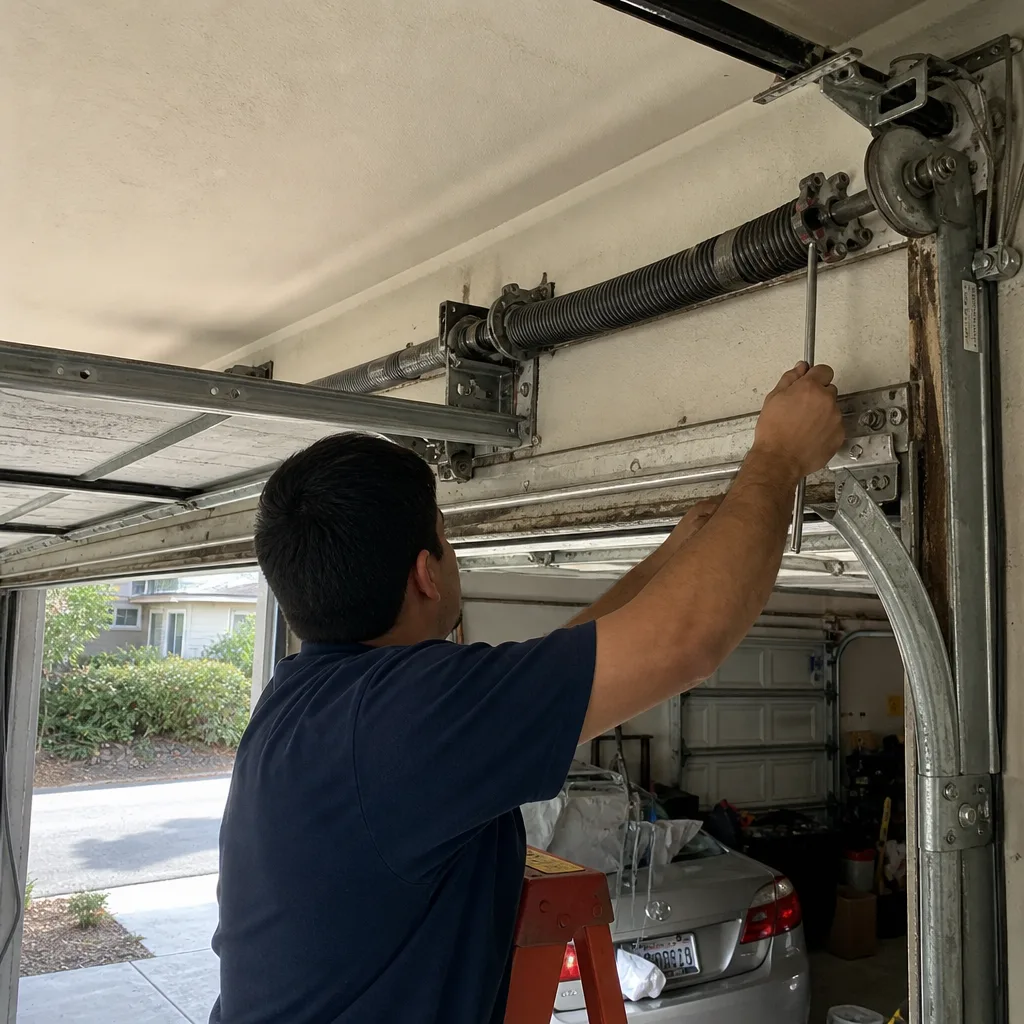
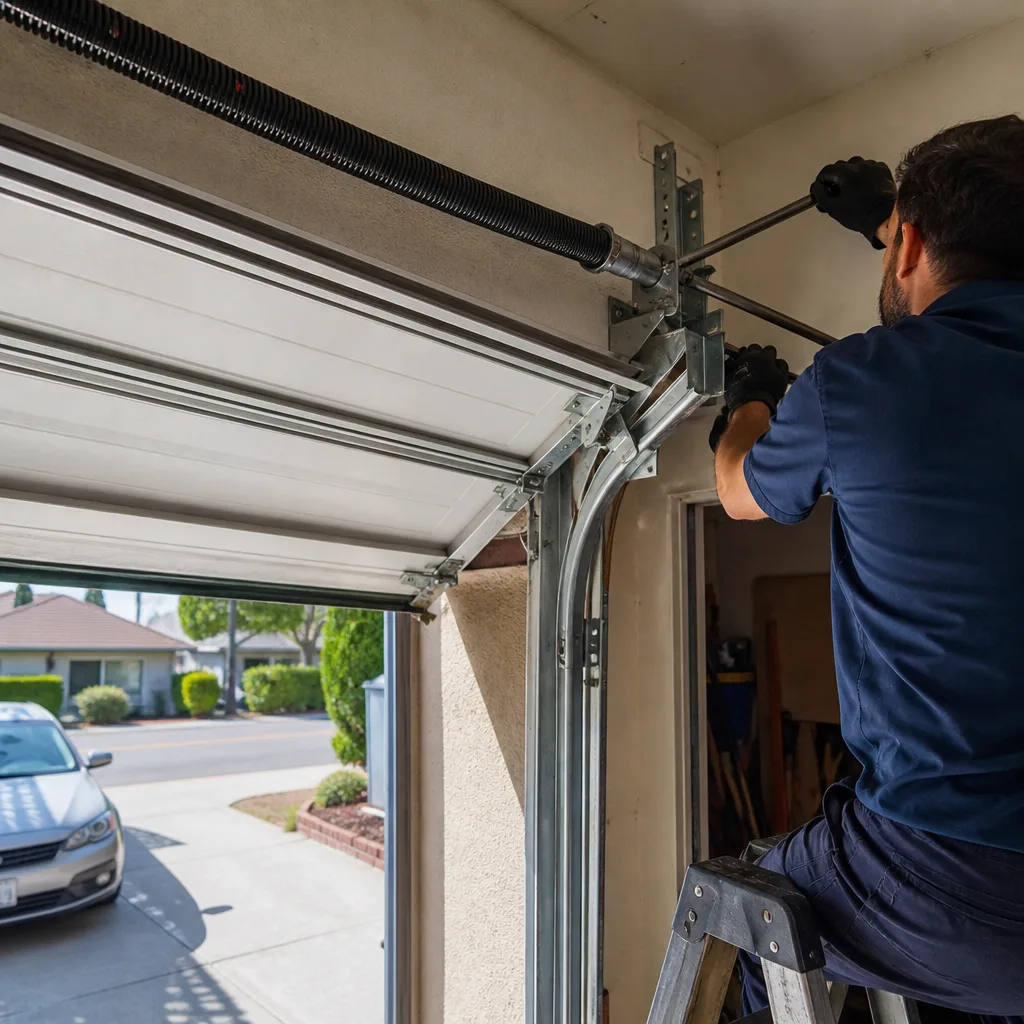
There are two spring systems on residential garage doors in Escondido: torsion springs mounted above the door opening and extension springs running along the horizontal tracks. Each requires a different check, and both demand respect. Torsion springs hold enough energy to cause serious injury if they fail while you’re working on them. Extension springs under load can snap back with similar force.
Here’s how to inspect them safely from a distance:
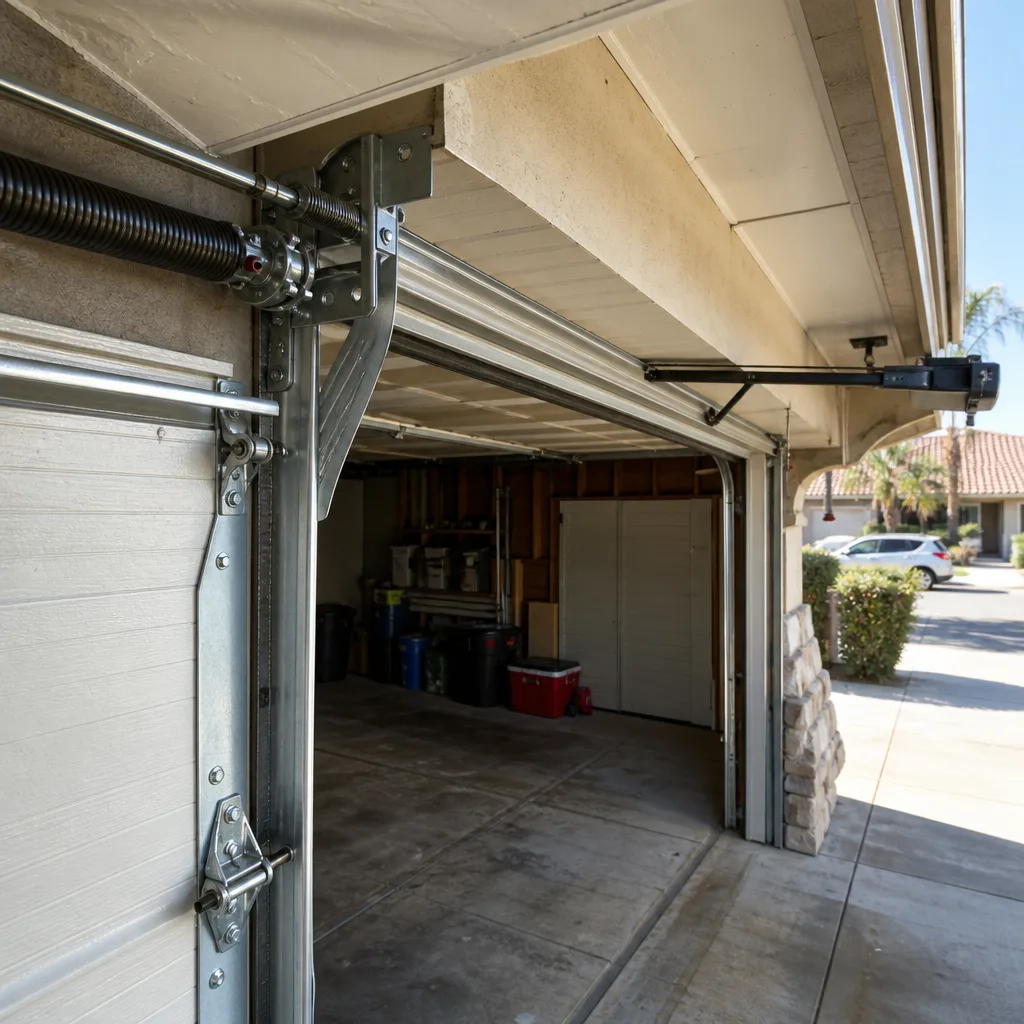
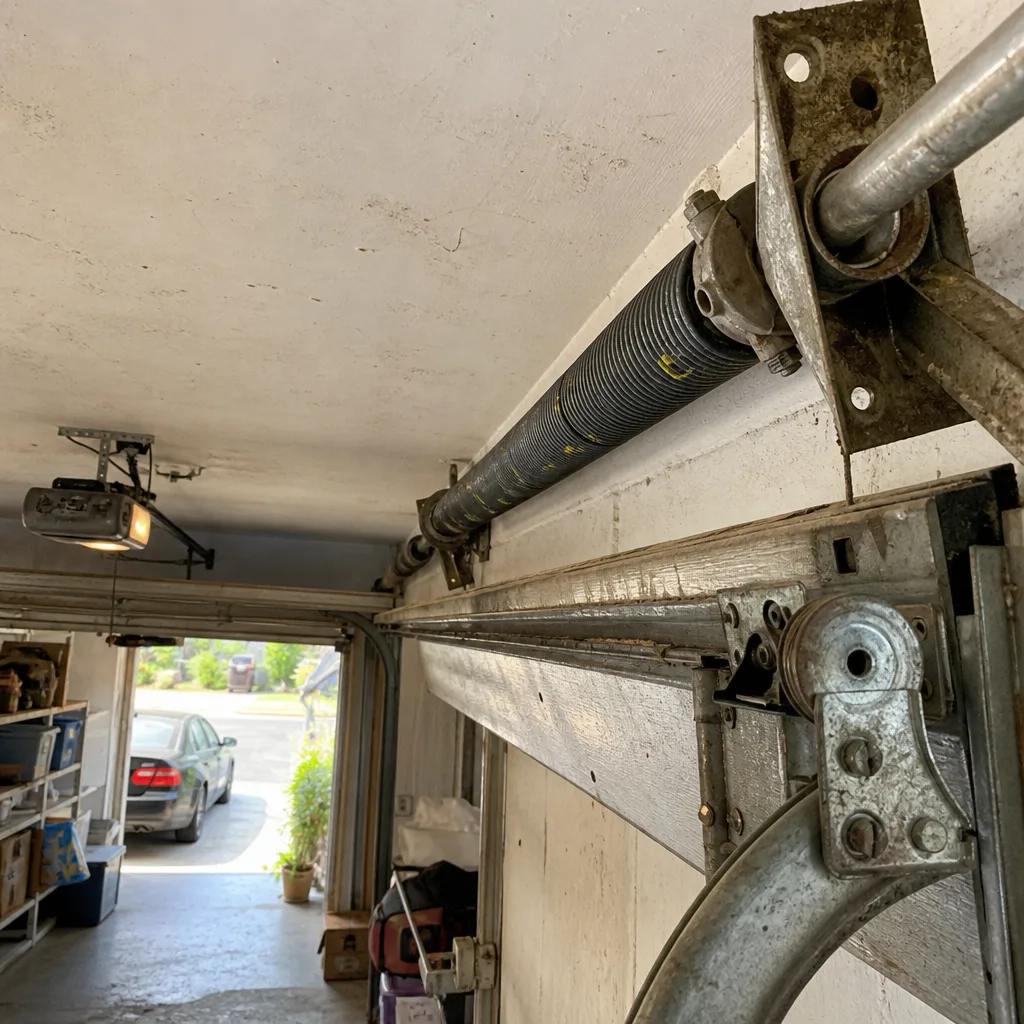
Torsion Springs (mounted above the closed door)
- With the door closed, stand a few feet back and look at the spring across its length. A healthy spring has uniform gaps between coils. If you see a gap, then no gap, then a gap, that’s a crack in the spring. Do not touch it. Do not operate the door by hand or with the opener.
- Look at the spring mounting hardware. Rust on the cones or brackets is worth noting but not urgent. Loose bolts or a shift in the spring’s position means the system needs professional attention.
- Listen during normal operation. A spring that creaks loudly or makes a popping sound when the door moves is telling you it’s near the end of its cycle life.
Extension Springs (running along the horizontal tracks)
- With the door closed, check whether both springs look the same. Uneven stretching means one side is failing and the door is being pulled unevenly.
- Inspect the safety cables, which should run through the center of each spring. If the cable is missing or frayed, do not operate the door. A spring that snaps without a safety cable is a projectile.
- Look for gaps between coils when the door is fully closed. Some gap is normal on an aging spring. A visible gap that’s wider than twice the spring wire’s thickness means it’s losing tension and should be replaced.
A spring that fails completely will typically snap when the door is closed, releasing its stored energy all at once. If you ever open the garage and find a two-piece spring or a gap in the middle of it, leave the door alone and call a garage door technician. This is not a repair you attempt with a socket set and a YouTube video. Call Garage Door Repair in Escondido and describe what you see. Replacement springs are matched to your door’s weight and size, and the wrong spring is just as dangerous as a broken one.
The Balance Test That Protects Your Opener Motor
Your garage door opener is not designed to lift the full weight of your door. The springs do that job. The opener provides the muscle to move a properly balanced door, and a balanced door means the opener motor works for a few seconds instead of straining under dead weight. When springs weaken, the opener compensates. It pulls harder, runs longer, and burns out its motor or strips its gear years earlier than it should.
The balance test tells you whether your springs are still doing their part. Here’s the procedure:
- Close the door. Pull the red emergency release cord on the opener to disconnect the door from the opener carriage.
- Lift the door manually by its handle. A healthy door should lift smoothly with moderate effort, and it should feel roughly the same weight from knee height to shoulder height.
- When the door reaches halfway, let go. A properly balanced door will stay at the halfway point. A door that drops below halfway has springs losing tension. A door that rises above halfway has springs that may be over-wound, which is less common but also a problem.
- Test the door at roughly three-quarters height. It should stay there too, or sink only slightly. If it drops hard at any point, the springs are not doing their job.
- Reconnect the door to the opener by pulling the release cord toward the opener until you hear it click, then run the opener once to re-engage.
If your door fails the balance test, stop using the opener until the springs are replaced. Every cycle with weak springs is a cycle your opener motor is working at a severe disadvantage. We see this on every brand of opener, including LiftMaster and Chamberlain units that are otherwise long-lived. The door is the load; the opener is just the mover. When the load gets heavy, the mover fails first.
Track and Roller Inspection Step by Step
Tracks and rollers are the parts most exposed to Escondido dust, and they’re the parts homeowners tell us they “never think about.” This inspection takes fifteen minutes and catches most issues before they become failures.
What to do:
- Look at the track alignment. With the door closed, stand to the side and sight down the vertical track. It should be straight and parallel to the door edge. A track that’s bowed or angled means the door is fighting it on every cycle, which wears rollers and stresses the opener.
- Check the track brackets. Each track is held to the wall and ceiling by brackets with bolts. Grab the track near each bracket and try to shake it. Movement means loose bolts. Tighten any bolts that have backed out, using the correct socket size. A bracket that’s pulling out of the wall or ceiling is a structural issue, not a bolt issue.
- Clean the track interiors. Use a dry rag or a shop towel to wipe the inside of each track where the roller wheels ride. In Escondido, you’ll pull out more dirt than you expect. Do not use grease in the track. Clean metal is the goal.
- Inspect each roller. Look at the wheels as you run the door up slowly. Any roller that’s chipped, flat-spotted, or wobbling as it spins needs replacement. A roller that’s seized and sliding rather than rolling is doing double damage to the track and the door.
- Check the roller play. Wiggle each roller stem. Some movement in and out of the track is normal. More than a quarter inch of play means the roller is worn or the track is spread. Either way, it’s worth a professional look before it pops out under load.
- Listen while the door moves. A healthy door makes a low, smooth sound. Grinding, squealing, or rattling points to specific parts. Grinding is usually a seized roller. Squealing is dry metal on metal. Rattling is loose hardware.
Rollers are consumable parts. They wear out, just like tires. A technician who tells you your rollers lasted forever is not being straight with you. We replace them as a standard part of many Ironside Garage Door Repair home service calls, and most homeowners notice the quieter operation immediately.
Hardware Tightening and Cable Inspection
A garage door cycles hundreds of times a month, and every cycle sends vibration through every bolt, nut, and hinge pin on the assembly. Fasteners loosen. It’s physics, not a defect. The fix is a regular tightening pass, which is one of the simplest things on this list.
What to check:
- Hinge bolts: Every hinge where two door panels meet has four bolts, two into each panel. Check all of them. Door panels flex slightly with each cycle, and hinge bolts are the first to loosen.
- Track bracket bolts: These are the lag bolts that hold the tracks to the framing. Use a socket, not a drill, to avoid stripping them. If a lag bolt spins without tightening, the hole has stripped. That’s a professional repair using a longer bolt or a toggle.
- Opener mounting hardware: The opener hangs from the ceiling on perforated angle iron or a mounting bracket. Check those bolts. A loose opener makes more noise and transfers vibration to the ceiling.
- Bottom bracket and cable hardware: The bottom brackets at the bottom corners of the door hold the lifting cables. Do not loosen or adjust these. They are under constant tension, even with the door closed. Inspect visually only. If the bolts are loose or the brackets are bent, call a professional.
The cables deserve their own mention. Garage door lifting cables are steel strands that carry the door’s weight when it’s moving. Over time, they fray, especially near the bottom brackets where they attach. Run your eyes along each cable with the door closed and with it open. A single broken strand means the cable is compromised and should be replaced. A cable that snaps while the door is moving causes the door to drop on one side, which can bend tracks, damage panels, and hurt anyone nearby. This is a professional repair, full stop.
For a complete inspection of your system, including cable assessment and tension checks, Garage Door Repair in Escondido covers it as part of a standard service call.
The Documentation Habit That Saves You Money
Most homeowners treat garage door maintenance as a thing you do when something breaks. The ones who get the longest life from their doors treat it as a thing you track.
We recommend keeping a simple log. A note on your phone works. A small notebook in the garage works too. After each inspection, record four things:
- Date of inspection. This is the anchor for everything else.
- What you found. Even if the answer is “nothing out of the ordinary,” write it down. The value is in the pattern over time.
- What you did. “Lubricated hinges and rollers with white lithium grease.” “Tightened two hinge bolts on panel three.” Specific, not general.
- What to watch next time. “Roller on far left is starting to wobble, check again in four months.”
This habit does three things. First, it tells you when parts are wearing faster than they should, which is how you catch a failing spring months before it breaks. Second, it gives a technician real history instead of guesses. When you tell us “the door has been getting louder for about eight months and the left side sags slightly when it’s halfway open,” that’s a diagnosis half-finished before we arrive. Third, it protects you from unnecessary work. A log that shows you replaced your rollers two years ago means nobody can convince you to replace them again at year three.
We keep internal service records the same way. Your door, our specialty, and the more history we have, the faster the fix.
Common Mistakes to Avoid
- Using WD-40 as a garage door lubricant. It’s a penetrant and solvent, not a lubricant for load-bearing parts. It strips existing grease and leaves metal surfaces unprotected. Within weeks in Escondido’s dust, those surfaces are grinding.
- Lubricating the track. Tracks are not lubrication points. Grease in the track collects grit and creates the exact abrasive paste that wears rollers and spreads dirt. The track should be clean and dry.
- Ignoring a squealing door. Squealing means metal on metal with no effective lubricant. Every squeak is wear. The longer it runs dry, the more likely a roller, hinge, or spring gives out during normal use.
- Adjusting spring tension without training and the right tools. This is the most dangerous mistake on this list. Torsion springs hold enough torque to cause serious injury or death. There is no safe way to “just try a quarter turn” without the proper winding bars and procedure.
- Running the opener on a door that fails the balance test. The opener motor burns itself out compensating for weak springs. You’re trading a spring replacement for a spring replacement plus an opener repair. We see this pattern regularly on every opener brand we service.
- Skipping the cable inspection. Cables don’t announce their failure the way springs sometimes do. A frayed cable can look fine at a glance and snap under load. This is a visual check that takes two minutes and prevents a dangerous drop.
- Cleaning with a pressure washer. Some Escondido homeowners deep-clean their garage exteriors in fall, and a pressure washer aimed at the door can blast water and grit into the bearings, the opener housing, and the spring coils. Use a hose with a soft spray or wipe the door down by hand.
When to Call a Professional
Some jobs are maintenance. Some are repair. The line matters, and crossing it with a wrench in your hand is how people get hurt.
Call a garage door technician if you find a cracked torsion spring, a frayed or snapped cable, a track that’s come loose from its brackets, a bottom bracket that’s bent, or a door that drops hard during the balance test. Call if you hear a sound you can’t identify but know is not normal. Call if you’ve done this checklist twice and noticed the same problem both times, whatever it is.
Ironside Garage Door Repair offers free estimates in Escondido. Call (855) 341-7752 and describe what you’re seeing. We’ll tell you straight whether it’s a maintenance item or a repair, and the price is quoted and agreed before any work starts.
Frequently Asked Questions
Twice per year is the standard for most Escondido homes, with an additional quick check during the dusty summer months. Homes near open land or dirt driveways may need lubrication every three months. The right product matters more than the frequency: white lithium grease on hinges and roller bearings, not a penetrant spray like WD-40.
White lithium grease applied to the ball bearings is the best lubricant for metal rollers. For nylon rollers with sealed bearings, use nothing on the wheel and a light silicone spray only if the bearing is accessible. Do not lubricate the track itself. Call (855) 341-7752 if you’re unsure which rollers your door uses and we’ll help you identify them over the phone before you buy a product.
No. Torsion springs are wound under enough tension to cause serious injury or death if they fail during adjustment, and extension springs carry similar stored energy. Spring replacement is a professional job that requires specific knowledge of your door’s weight and spring sizing. This is the one task on this list where DIY is genuinely dangerous.
A typical maintenance service call in Escondido runs between $80 and $150 depending on what’s being serviced. Lubrication, balance testing, hardware tightening, and inspection are usually included. If the inspection finds worn parts, the repair quote is separate and always agreed before work begins. Call (855) 341-7752 for an exact quote.
Heat thins lubricant and causes metal parts to expand slightly, which changes clearances and makes existing wear more audible. Add Escondido’s summer dust getting into the grease points, and a door that was quiet in spring can sound noticeably louder by August. Clean the tracks and re-lubricate the bearings. If the noise persists, bring in a technician to check for a failing roller or weakening spring.
A properly maintained door in Escondido typically lasts 15 to 20 years for the door itself, with springs lasting 7 to 10 years and rollers lasting 5 to 8 years depending on use and dust exposure. The climate here accelerates wear on lubricated parts more than on structural components. Regular inspection catches the parts that wear first, which is cheaper than replacing everything at once.
The Bottom Line
Your garage door is the largest moving part in your Escondido home, and it works harder than you think it does. The right lubricant on the right part, a balance test every six months, a careful look at springs and cables, and a simple log of what you find are the difference between a door that lasts twenty years and one that fails early. If the checklist turns up something you’re not equipped to handle, stop and call a professional. That’s what we’re here for.
Written by the team at Ironside Garage Door Repair, serving Escondido since 2016.
See the difference
 Before
 After
 Before
 After
 Before
 After